

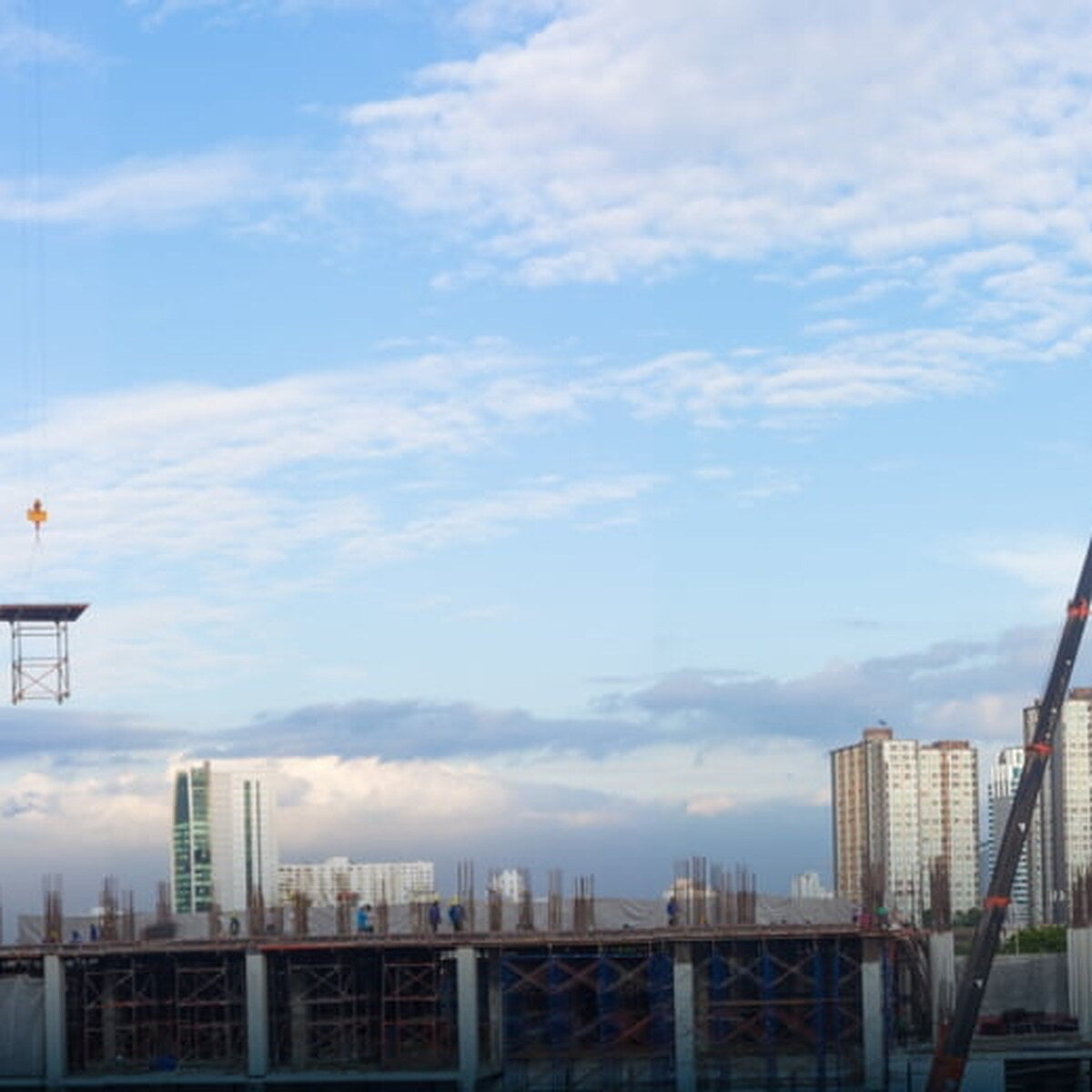
Quick answer: On South Korea's largest semiconductor construction project, a site of roughly 4.16 million square meters, a DJI Dock 3 ($15,890) replaced manual walking and driving inspections with scheduled autonomous patrols that run down to -20°C. The reported result was surveying time cut by more than 80%, from several days to a few hours, manual inspection labor eliminated entirely, and zero inspection-related accidents since the switch. Below is how the workflow actually runs, and the one licensing detail that catches large sites off guard.
Updated August 2026.
DJI has published a case study filmed at the Yongin semiconductor industrial complex in Gyeonggi Province, South Korea, where a Dock 3 is used for daily construction site monitoring. It is a useful video because it is not a product demo. It is a project team describing what changed in their management routine, in winter, on a site far too large to walk.
Below we have pulled out the parts that translate to any large civil or industrial build, along with the operational detail from the video that is easy to miss and expensive to discover late.
The problemWhat problem does automated site monitoring actually solve?
The complex in the video spans approximately 4.16 million square meters, divided into five sections across four specialized fields. At that scale, the team describes manual inspection as physically impossible to complete in any short period. Walking the site or driving it took more time than the information was worth, especially in bad weather.
Winter made it worse. Severe cold reaching -10°C to -20°C and frequent snowfall meant unstable and hazardous ground conditions, prolonged cold exposure for the people doing the walking, and a great deal of time and manpower consumed simply to work out what the overall situation was.
The consequence they name is the one that matters commercially: the greatest inefficiency was missing the golden time for critical crisis response. On a project where a single day of delay is treated as unacceptable, the cost of a slow situational picture is not the labor hours. It is the delayed decision.

How does a drone in a box keep working through a Korean winter?
This is where most site monitoring programs quietly die. A monitoring cadence that only holds in fair weather is not a monitoring cadence, it is a summer habit. The team singles out two things.
First, the Dock 3 maintains stable automatic flight in sub-zero winter conditions. Second, and more specifically, the battery heating system enables immediate takeoff even at -20°C, so the mission does not wait for the equipment to warm up. They also call out the durability and precision of the GPS control, which allowed accurate scans of difficult terrain in strong winds and heavy snow.
The detail that best captures the change is about snow. Previously, snow removal was required before any site inspection could begin, because inspectors could not walk the paths until they were cleared. Now the drone is the first thing to arrive and the fastest to assess the situation. The inspection no longer sits behind the snow clearing on the critical path.


What does the daily patrol workflow look like?
The description in the video is short because the workflow itself is short. The entire system operates automatically, with the aircraft conducting scheduled patrols and collecting data automatically. Data is integrated through DJI FlightHub 2, which is what turns a series of flights into project management rather than a folder of photos.
The practical outcome is that the team monitors the entire site remotely from the office, without needing to be physically present in the field. Three capabilities do most of the work:
Scheduled patrols
Missions run on a set timetable and collect the same data from the same paths every time. Consistency is what makes progress comparable week over week, and it is the part a manual program almost never sustains.
Access without access
Structures at great height that would otherwise require specialized equipment, plus areas that are dangerous or difficult to reach directly, can now be inspected immediately. No lift, no permit, no exposure.
Integrated data in FlightHub 2
Flights feed a single project record rather than separate deliverables, which is what enables progress tracking against milestones instead of one-off imagery.
For teams that would rather fly manually and own the aircraft outright, the same mapping outcome is achievable with a piloted workflow. Our Matrice 4 construction survey guide covers that path, and the best drones for surveying and mapping in 2026 compares the mapping-focused aircraft against each other.
The detail worth stealingWhat is the hidden constraint on very large dock sites?
On a site this large, the limiting factor was not the aircraft. It was FlightHub 2's caps on streaming and on the number of mapping photos. The team states plainly that on large-scale sites they previously faced cost burdens because of those limits. They resolved it by moving to the AIO deployment, which runs FlightHub 2 locally on a closed network with those restrictions removed. If you are sizing a dock program for a site measured in square kilometers rather than acres, price the data platform tier at the same time you price the hardware, not after.
This is the single most useful thing in the video, and it is exactly the kind of constraint that does not appear on a spec sheet. The dock hardware scales with the site. Cloud photo and streaming allowances do not, and on a multi-year megaproject the overage is a real line item.
The closed-network deployment carries a second benefit the team calls out separately: because it operates on a closed network, their security concerns were fully addressed, and because processing happens locally, mapping and modeling complete rapidly regardless of internet speed. On a construction site with poor connectivity, local processing is the difference between a model you look at today and one you look at tomorrow.
The reporting changeHow does this change stakeholder reporting?
The team frames the shift as moving completely from subjective individual judgment to a data-driven decision-making support system. Two things drive that.
Site models are updated in real time, which they credit with drastically improving both accuracy and speed. And meetings are run against the latest data shared through the cloud, which they say significantly enhanced situational awareness and maximized communication efficiency. In practical terms, the weekly progress meeting stops being an argument about whose walkthrough was more recent, because everyone is looking at the same current model of the site.
That same integrated data set is what supports precise tracking of construction progress against key milestones. Progress documentation becomes a byproduct of the patrol rather than a separate task somebody has to schedule.
The resultsWhat did the site actually get out of it?
The safety result is the one the team leads with. By eliminating the manual labor required for inspections, they cut off the risks associated with it at the source, and they report no inspection-related accidents since making the change. Sharing field hazards in real time also moved them from a reactive post-accident recovery posture to proactive pre-accident prevention.
Their own conclusion is that for large-scale or highly complex civil engineering sites, this is no longer an option but a necessity. They acknowledge the initial investment openly, and argue it is justified by accident prevention plus precise progress tracking through integrated data management.
If your interest is emergency response rather than construction, the dock supports a different playbook entirely. See our Dock as First Responder setup guide for the public safety counterpart to this workflow.
What you needThe kit behind this workflow
The Dock 3 is the fixed piece. The aircraft that pair with it for this kind of site work, the Matrice 4D and Matrice 4TD, are dock-specific variants that we supply by quote rather than list. If you would rather fly manually, the piloted Matrice aircraft below cover the same mapping and inspection ground.
| Component | Role | Price |
|---|---|---|
| DJI Dock 3 | Weather-sealed docking station for scheduled autonomous patrols, with battery heating for sub-zero takeoff | $15,890 |
| DJI Matrice 4D / Matrice 4TD | Dock-paired aircraft for the automated patrol shown in the video | Available by quote |
| DJI Matrice 4E | Mapping-focused manual alternative for teams flying piloted survey missions | $5,189 |
| DJI Matrice 400 | Larger aircraft for bigger sites and heavier survey payloads | $10,450 |
| DJI FlightHub 2, cloud or AIO local deployment | Mission scheduling, data integration, progress tracking and reporting | Available by quote |
Prices last verified August 2026. Note for federal and state procurement: DJI is not NDAA compliant. If your project requires NDAA-compliant hardware, see our NDAA compliant drones guide.
Frequently asked questions
How much does a DJI Dock 3 cost?
The DJI Dock 3 is $15,890 at Global Drone HQ as of August 2026, shipping from the US. The dock-paired aircraft, the Matrice 4D and Matrice 4TD, are supplied by quote, as is FlightHub 2. Request a quote for a complete site monitoring package.
Can a drone in a box operate in freezing weather?
Yes. In the case study filmed at the Yongin site, the Dock 3 maintained stable automatic flight through severe cold of -10°C to -20°C and frequent snowfall. The battery heating system enables immediate takeoff at -20°C, so missions do not wait for the aircraft to warm up.
How much time does automated drone monitoring save on a construction site?
The project team in this video reports surveying time reduced by more than 80%, from several days down to a few hours, on a site of roughly 4.16 million square meters. They also report eliminating 100% of the manual labor previously required for inspections.
Does a construction site need internet for drone mapping and modeling?
Not with a local deployment. The team in this case study runs the AIO configuration, which processes mapping and modeling locally on a closed network. They report that processing completes rapidly regardless of internet speed, and that running on a closed network resolved their security concerns.
Are there limits on FlightHub 2 streaming or mapping photos?
Yes, and on very large sites those limits matter. The team states they previously faced cost burdens from limits on streaming and on the number of mapping photos in FlightHub 2. Adopting the AIO deployment removed those restrictions. Budget the data platform alongside the hardware when sizing a large site.
How does drone monitoring improve construction site safety?
By removing people from the inspection itself. The team reports zero inspection-related accidents since replacing manual inspections with drone patrols, and credits real-time hazard sharing with shifting them from post-accident recovery to pre-accident prevention. High structures and hazardous areas are inspected without specialized access equipment.
Is the DJI Dock 3 NDAA compliant?
No. DJI is not NDAA compliant, and no DJI product is approved for federal procurement under the NDAA. If your contract requires NDAA-compliant hardware, the qualifying brands are Skydio, Parrot ANAFI USA, Freefly, Inspired Flight and Teal. See our NDAA compliant drones guide for the current approved list.
Do you still need a pilot on site with a Dock 3?
The patrols themselves run automatically and are monitored remotely from the office, which is the entire point of the deployment shown here. You still need appropriate FAA authorization for the operation you are running, including any beyond visual line of sight approval, plus periodic maintenance visits to the dock.
Spec a Dock 3 site monitoring package
Tell us your site size, patrol frequency, climate, and reporting requirements and we will spec the right dock, aircraft, and FlightHub 2 deployment, then send a formal quote. Purchase orders supported.
Request a QuoteRelated reading
- Drones for construction: aircraft, payloads and workflows by job type
- DJI Dock 3 review: the complete drone in a box guide for 2026
- DJI Matrice 4 construction survey guide
- Best drones for surveying and mapping in 2026
- DJI Zenmuse L3 survey workflow: what a LiDAR deliverable takes
Video and imagery credit: DJI. Case study filmed at the Yongin semiconductor industrial complex in Gyeonggi Province, South Korea. Global Drone HQ is an authorized DJI enterprise dealer shipping from the United States.
Share:
DJI Zenmuse L3 Forestry and Plantation Mapping: 3,800 Hectares in Two Days
Robots for Trade Show Booths: What Actually Draws a Crowd (2026 Guide)