

Public Safety Drones | Law Enforcement, Fire & Search and Rescue UAVs
Drone Solutions for Public Safety
Drones for Law Enforcement, Fire & Search and Rescue
Deploy eyes-in-the-sky in 90 seconds. Modern public safety drones give first responders real-time situational awareness, thermal imaging, and extended range — saving lives when every second counts.
Core Public Safety Applications
Proven operational uses across law enforcement, fire, and EMS.
Search & Rescue
Thermal cameras detect body heat in darkness, dense foliage, and water at distances up to 1 km. Cover a square mile in under 30 minutes.
Fire Scene Intelligence
Map fire perimeters, spot hot spots through smoke, and monitor structure integrity — keeping ground crews safer.
Law Enforcement Surveillance
Provide aerial overwatch for SWAT operations, crowd monitoring, and fugitive searches without helicopters.
First-Responder Dispatch
Program-and-fly autonomous pre-planned routes to arrive at incidents before ground units.
Wilderness & Water Rescue
Locate missing persons in challenging terrain; drop flotation devices or supply payloads via release mechanism.
Comms Relay
Extend radio range in large-scale disaster response with onboard repeater payloads.
Top Drones for Public Safety
Trusted by agencies across North America.


Ground Robots for Public Safety
Pair your aerial program with Unitree ground robots for reconnaissance, hazmat, and fire response.
Unitree Go2 Ent Robot Dog
Send eyes and sensors into structures, culverts, and hazmat scenes before personnel. PTZ camera and gas-detection payload options. From $13,205.
Explore Unitree Robots →Unitree B2 Fire & Rescue Series
Industrial quadruped configured for smoke, heat, and degraded-visibility response, with SLAM options for interior mapping. Quoted per deployment.
Request a Quote →Ground + Air, One Vendor
Drones overhead, robots inside the structure. One quote, one support contact, one procurement process for your entire unmanned program.
Talk to Us →Frequently Asked Questions
Are public safety drones subject to FAA restrictions?
Public safety agencies can fly under a COA (Certificate of Authorization) or the Part 107 framework. Many agencies also operate under the FAA's BEYOND program for BVLOS and night operations. Our team can connect you with compliance resources and authorized training programs.
What thermal camera do you recommend for SAR?
The DJI Matrice 4T and Matrice 30T both carry dual-sensor payloads with 640×512 uncooled thermal sensors and powerful zoom cameras — the combination is ideal for SAR. For maximum range, pair with the Zenmuse H30T on the Matrice 350 RTK.
Do you offer government / agency pricing?
Yes — we offer agency purchase orders, cooperative purchasing agreements (GSA/NASPO), and volume pricing for fleet deployments. Contact our public safety team for a custom quote.
Can drones be used for crowd monitoring at events?
Yes, with appropriate permits and in compliance with local regulations. Drones equipped with wide-angle and zoom cameras provide effective aerial situational awareness for large events, protests, or gatherings.
What training do you recommend for first responders?
We recommend DJI's FlightHub 2 platform for fleet management plus FAA Part 107 certification for all pilots. We can connect agencies with accredited public safety UAS training providers.
Do you offer ground robots for public safety?
Yes. We carry Unitree ground robots including the Go2 Ent for reconnaissance and hazmat assessment and the B2 Fire & Rescue series for hazardous-environment response. Unitree is a Chinese manufacturer, so agencies with procurement restrictions on Chinese-made hardware should verify their policies first — we can help you scope the right platform either way.
Equip Your Agency with the Right Tools
Get a custom quote, product demo, or agency pricing for your department's drone program.
Request Agency PricingOr call us: 1-800-DRONE-HQ
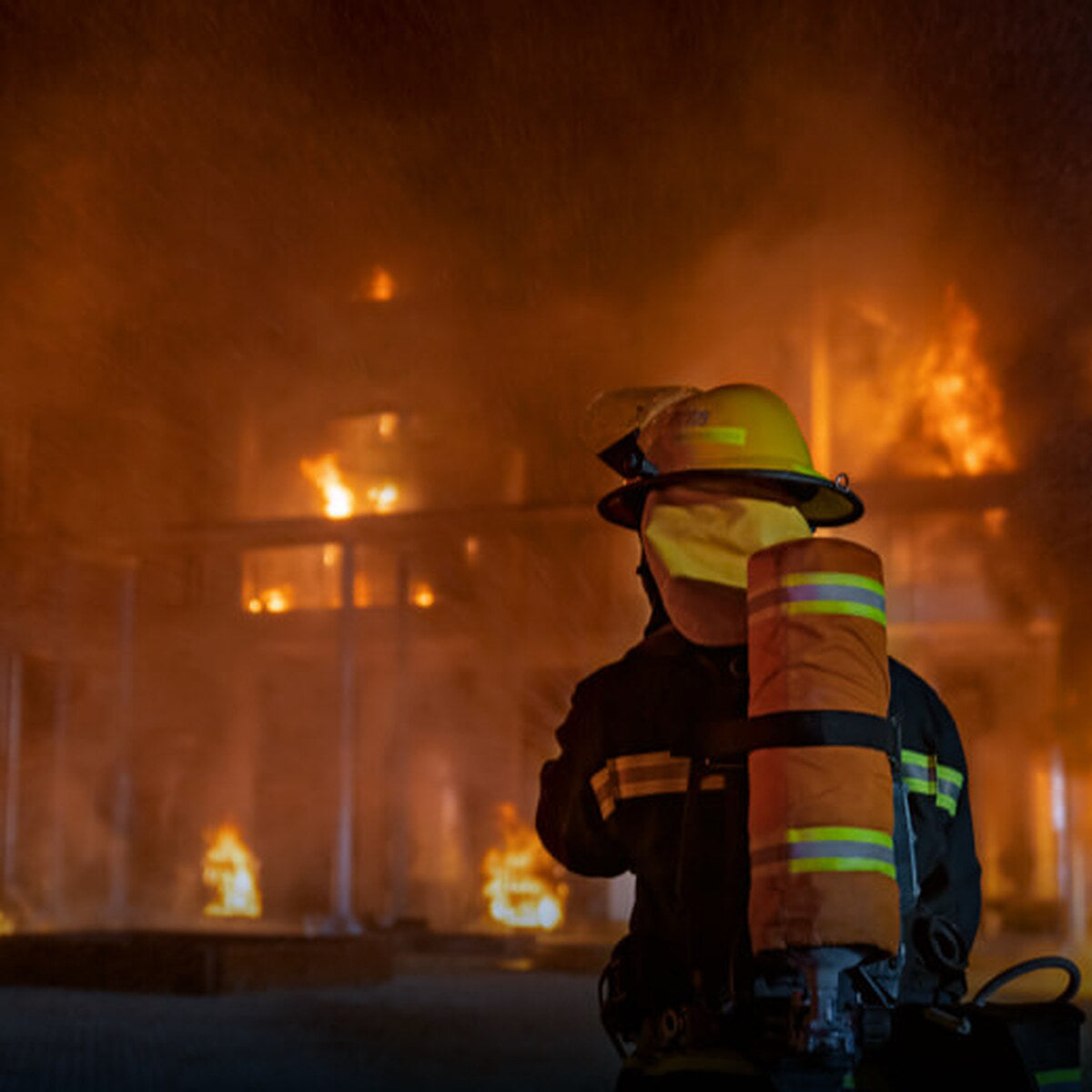
Get eyes over the scene before the next unit arrives
Thermal that finds people in the dark, overwatch that launches without a pilot on scene, and ground robots that go inside before anyone does.
The problems that make or break a call
Every minute between dispatch and situational awareness is a minute your team is working blind.
You cannot see into the dark
Ground search at night covers a fraction of the area and misses subjects in cover. Radiometric thermal finds body heat through brush and darkness, and a laser rangefinder puts a grid coordinate in a ground team’s hands.
A pilot has to drive to the scene
By the time a crew arrives and sets up, the situation has changed. A sealed dock launches on dispatch and is overhead while units are still responding.
Somebody has to go in first
Structure fires, hazmat and barricaded subjects all start with a person entering an unknown space. A quadruped robot goes in ahead of the team and streams back what is actually in there.
Explore by mission
Deep-dive playbooks for each mission profile, with recommended configurations and real pricing.
Patrol support, tactical overwatch and Drone as First Responder programs.
Hotspot mapping, fireground overwatch and overhaul decisions from the air.
Thermal search patterns, rangefinder coordinates and night operations.
Every platform compared with prices, from patrol kits to DFR docks.
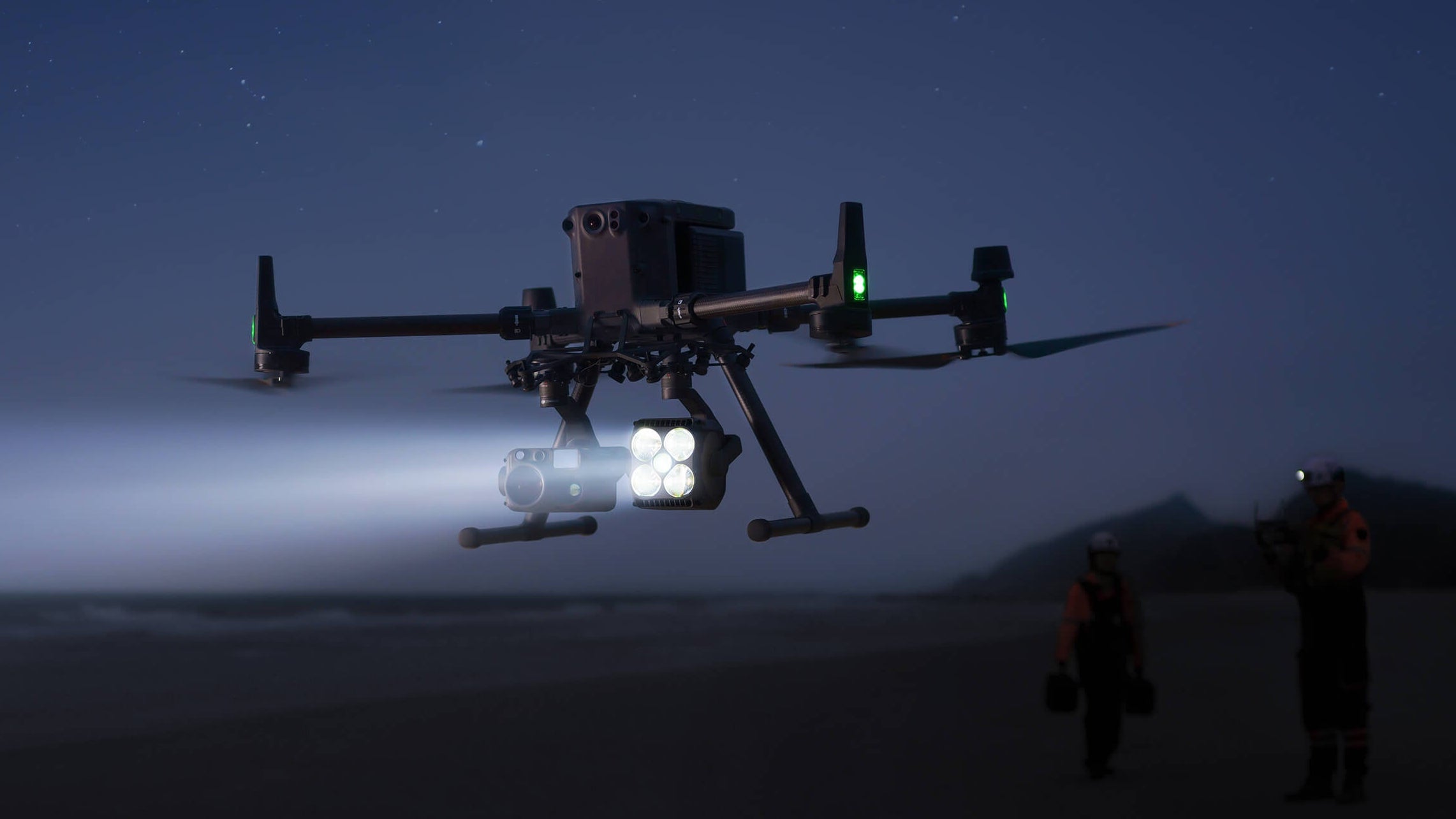
Most of these calls happen after dark
Thermal finds the subject, a spotlight puts working light on the ground, and a loudspeaker makes contact without putting a deputy in the treeline. The aircraft is only half the system.
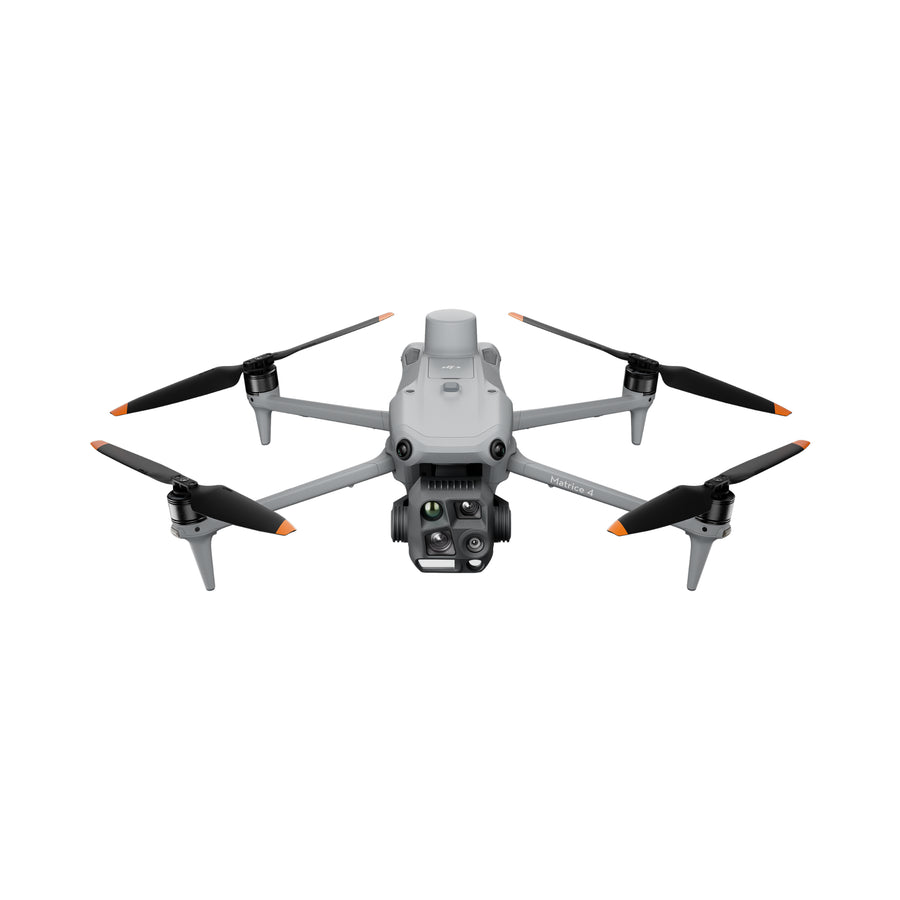
Airborne in about 90 seconds
Compact enough to live in a patrol trunk and launch one-handed, with the thermal and optical reach to work a scene from a safe standoff.
- 640×512 radiometric thermal
- 1,800m laser rangefinder for grid coordinates
- 56× hybrid zoom for safe standoff
- IP54 weather sealing and 12 m/s wind resistance
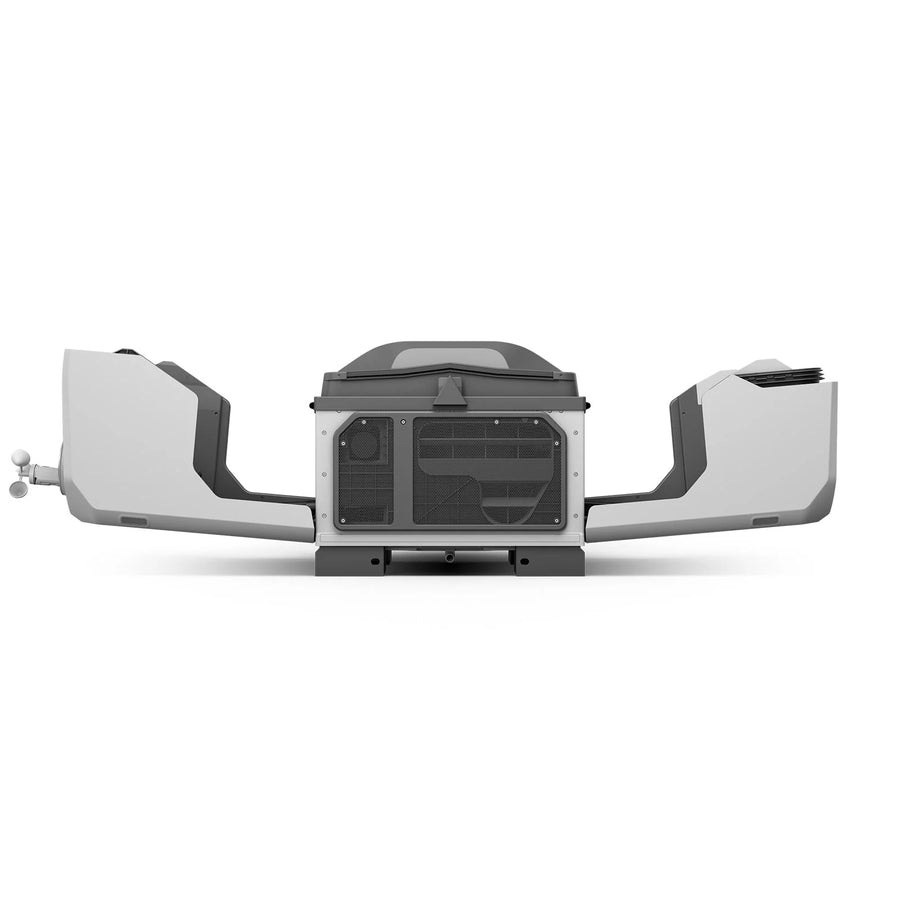
Overhead before the first unit arrives
A sealed dock launches on dispatch with no pilot driving to the scene, then returns and recharges itself between calls.
- Launches automatically on dispatch
- Self-charging between missions
- Sealed against weather for remote siting
- Live feed straight to command
Eyes inside before anyone enters
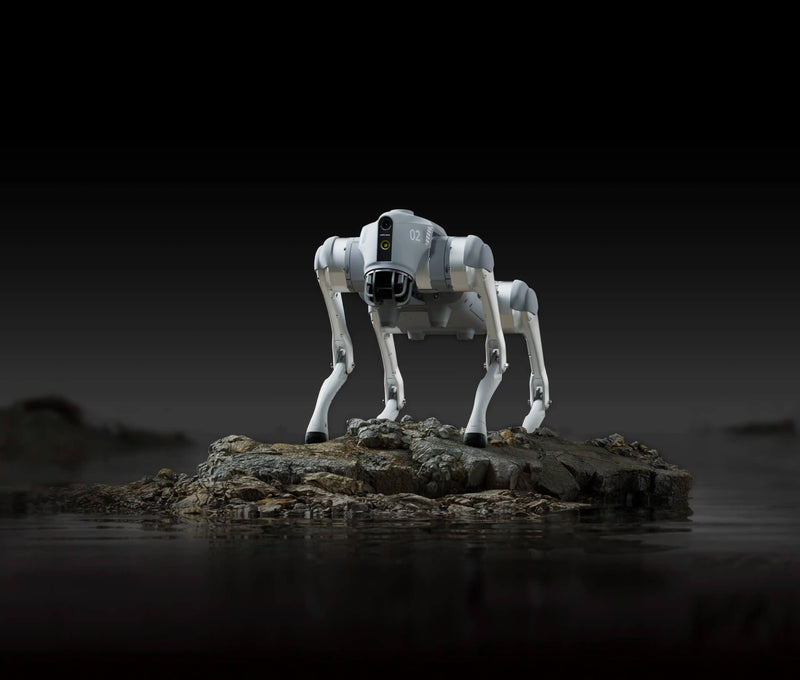
A quadruped walks into structures, culverts and hazmat scenes ahead of personnel, streaming video back so command can see the space before committing a team.
- Climbs stairs, curbs and rubble
- Goes where a drone cannot fly
- Sensor and camera payload options
- Keeps personnel out of unknown spaces
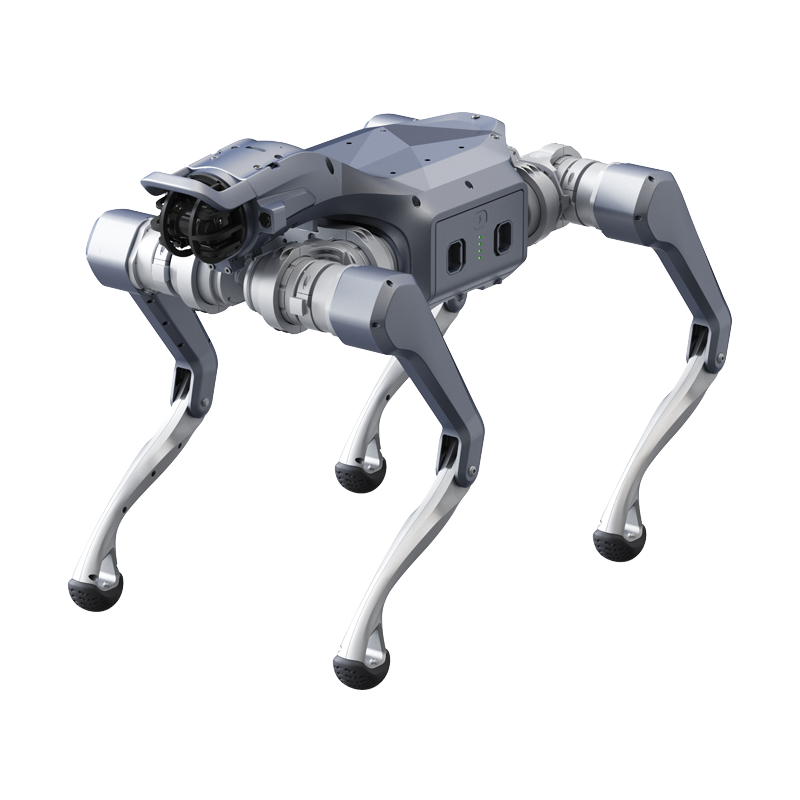
Ground robots for the places a drone cannot go
Structure interiors, stairwells, culverts, tunnels and hazmat scenes. Unitree quadrupeds pair with your aerial program so one vendor covers both.
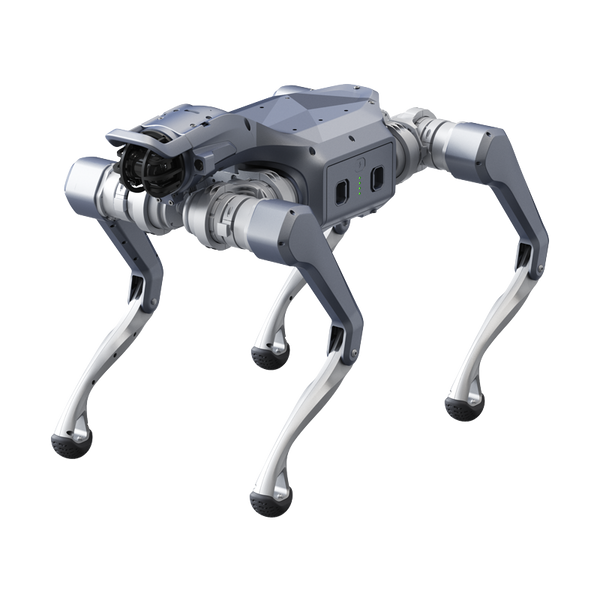
The practical entry point for a department. Walks into structures and confined spaces ahead of personnel with camera and sensor payload options.
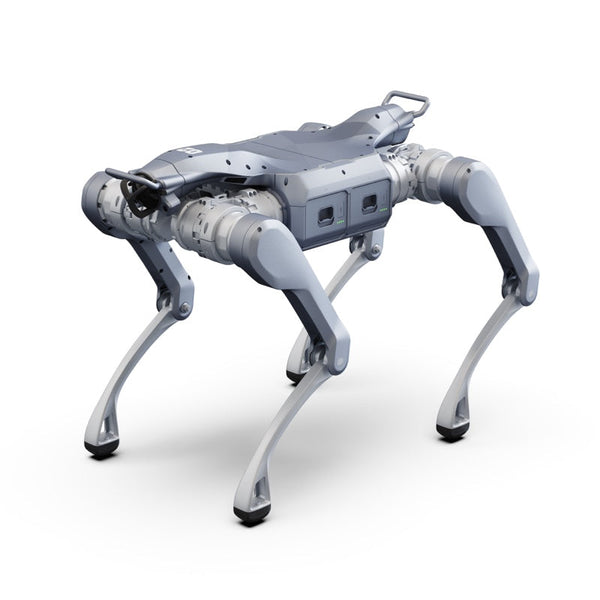
IP56 industrial quadruped with over five hours of endurance and 128-channel LiDAR, for large outdoor scenes and extended perimeters.
The payloads that make the aircraft useful
An airframe on its own does not close a call. These are the attachments agencies add most often.
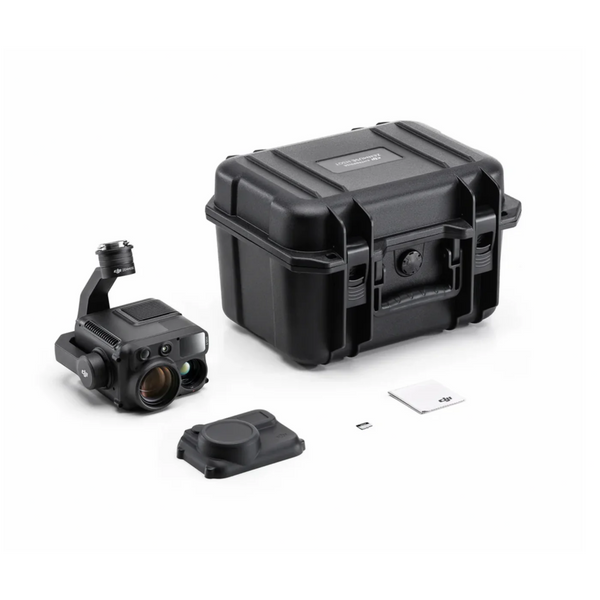
Radiometric thermal with long-range optical zoom for search and fireground work.
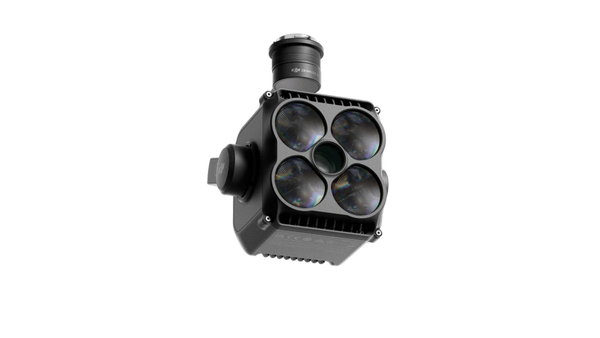
Puts real working light on the ground so crews can operate under the aircraft.
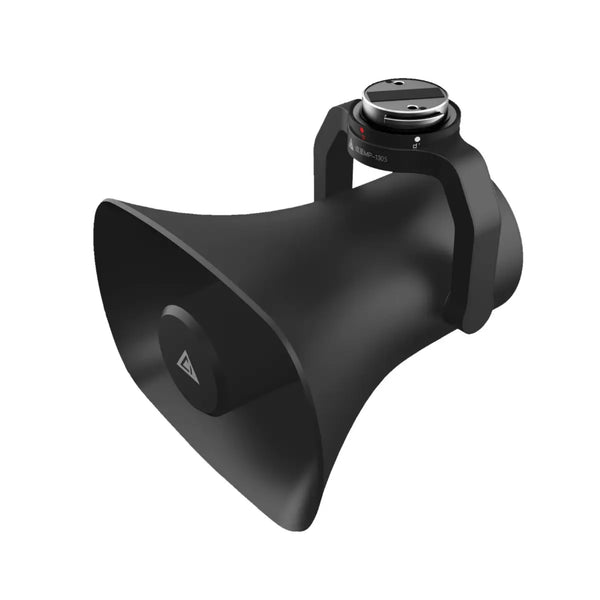
Give commands and reassurance to a subject without sending someone in.
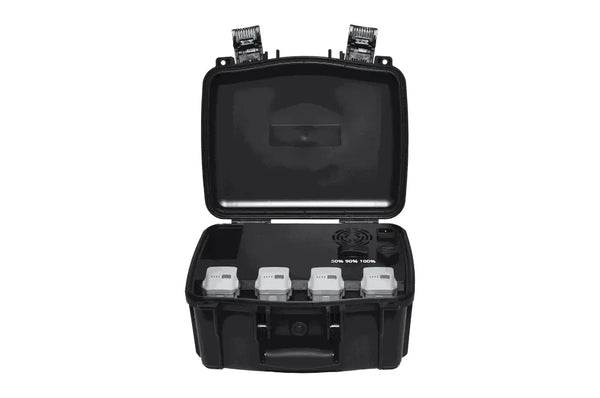
Turns batteries around at the scene so the aircraft is not grounded mid-incident.
How a mission actually runs
What the workflow looks like from dispatch to the report that follows.
Dispatch
The aircraft launches from the dock or the responding unit deploys it on arrival. No separate mobilization.
Locate
Thermal identifies heat signatures. The rangefinder converts what the camera sees into coordinates ground teams can navigate to.
Direct
Command works from a live feed instead of radio description. A ground robot enters the structure while the aircraft holds overwatch.
Document
Flight logs, imagery and scene maps are retained for the after-action report and any review that follows.
Before your agency writes the spec
DJI and Autel aircraft are not NDAA compliant, and Unitree robots are made in China. If your agency is bound by that restriction, say so on the first call and we will route you to compliant platforms rather than sell you something you cannot deploy.
Aircraft, payloads and ground robots on one quote, one support contact and one procurement process instead of three separate vendor onboardings.
Formal quotes, W-9s and vendor registration are routine for agencies and municipalities. Send us your procurement requirements and we will match your process.
Other industries we equip
Equip your agency with the right aircraft
Tell us your missions, coverage area and budget cycle. We will spec the platform, payloads and charging, then send a formal quote.
Request Agency PricingOr call +1 (855) 906-5185