

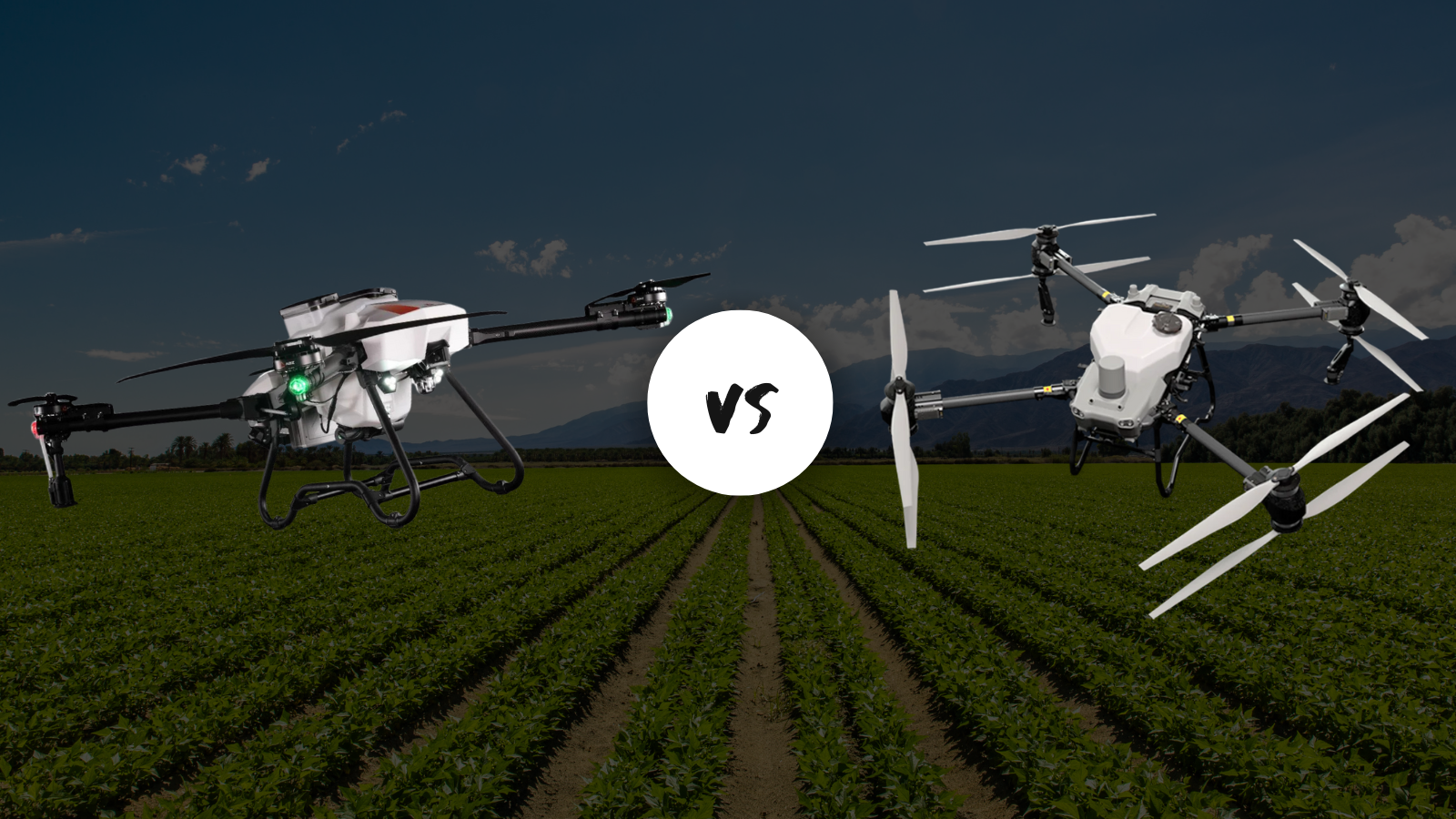
The agricultural landscape is undergoing a rapid transformation, with technology playing an increasingly vital role in enhancing efficiency, precision, and sustainability. Among the groundbreaking innovations making waves in modern farming are agricultural drones. These unmanned aerial vehicles offer a multitude of benefits, from precise crop spraying and efficient fertilization to detailed field mapping and insightful crop health analysis. As the adoption of these advanced tools continues to grow, choosing the right agricultural drone becomes a critical decision for farmers and agricultural businesses. In this comparative analysis, we delve into two leading high-capacity options in the market: the ABZ Innovation L30 and the DJI Agras T50, providing a detailed examination of their features and capabilities to help you make an informed choice.
Meet the ABZ Innovation L30: The European Contender
 The ABZ Innovation L30 stands out as a pioneering force in the agricultural drone sector, proudly holding the distinction of being the first European-made 30-liter drone equipped with a liquid-cooled controlled droplet application (CDA) spraying system. This European engineering underscores a commitment to high-quality manufacturing and adherence to stringent standards. With a maximum liquid payload capacity of 30 kg, the L30 is well-suited for a variety of spraying applications. Furthermore, it offers enhanced versatility with the availability of a 50L granule spreader, allowing for both liquid and solid material distribution.
A key differentiator of the ABZ Innovation L30 is its advanced CDA spraying system. This technology ensures a consistent droplet size, ranging from 50 to 800 microns, which optimizes coverage and significantly reduces spray drift. The system is liquid-cooled, contributing to sustained performance during operation. With an adjustable spray flow of up to 16 liters per minute (4.2 gallons per minute), the L30 provides the flexibility needed for various application rates. This precise control over droplet size and flow rate not only maximizes the effectiveness of treatments but also minimizes waste, leading to better resource utilization and a reduced environmental footprint.
In terms of power and endurance, the ABZ Innovation L30 features a battery capacity of 25,000 mAh, providing a flight time of 8 to 16 minutes per charge. The standard charge time for the battery is a quick 5 to 15 minutes. To further enhance operational efficiency and minimize downtime, the L30 is equipped with a plug-and-play battery and tank swapping system, allowing for rapid turnaround in the field. While the flight time might appear relatively short for very extensive farming operations, the rapid charging and swappable battery system enable near-continuous work cycles, proving particularly beneficial during critical application windows.
 The operational efficiency of the L30 is further underscored by its ability to cover up to 52 acres (21 hectares) per hour under optimal conditions, such as low-volume applications on flat terrain. In more typical real-world scenarios, with application rates around 2 gallons per acre, the coverage is closer to 26 acres per hour. The drone incorporates an advanced flight planning algorithm and optimized downward airflow, which together ensure precision and efficiency in material distribution.1 Safety and precision are paramount, with the L30 featuring LIDAR-based obstacle avoidance and real-time 3D terrain mapping capabilities. This technology allows the drone to navigate complex landscapes with accuracy and avoid collisions, while automated terrain following ensures a consistent spray height, even in undulating fields.
The ABZ Innovation L30 offers seamless technology integration with an advanced RTK system for enhanced navigation and operational precision. Its customizable open-source software allows users to adapt flight plans to their specific farm needs and ensures compatibility with third-party agricultural tools. The system can handle SHP and KML files for detailed flight planning. Notably, the L30 prioritizes data security by operating fully offline, with no forced cloud connections unless the user explicitly enables updates. This feature can be particularly appealing to users concerned about data privacy and reliability in areas with limited internet access.
The recommended retail price for the ABZ Innovation L30 is around €12,900 (approximately US $14,041.26), although prices may vary depending on the specific configuration and retailer. Beyond its core features, the L30 boasts several additional benefits. It holds CE Certification, signifying adherence to high European quality standards. The drone features a crash-resistant frame and field-repairable components, enhancing its durability and ease of maintenance. It is versatile, suitable for a wide range of applications, including agriculture, vineyards, grain fields, and even monitoring and surveillance. ABZ Innovation emphasizes sustainability and eco-friendly solutions in their drone design, and they provide extensive customer support and after-sales service. Furthermore, critical avionics and flight control components are not sourced from China, meeting both U.S. and European compliance standards.
Exploring the DJI Agras T50: The Global Leader

The DJI Agras T50 has established itself as a global leader in the agricultural drone market, renowned for its power, versatility, and advanced technological integration. It features a robust coaxial twin-rotor propulsion system, providing exceptional stability even when carrying heavy payloads. The T50 boasts a higher liquid payload capacity of 40 kg for spraying operations. For solid material spreading, it offers a capacity of 50 kg with a large 75 L spread tank. This enhanced carrying capacity allows for greater coverage per flight, making it particularly advantageous for large-scale agricultural operations.
The DJI Agras T50 utilizes a dual atomizing spraying system, with two sprinklers as standard and the option to equip an additional pair for increased flow rate. The system allows for adjustable droplet sizes ranging from 50 to 500 microns, catering to diverse application needs. The maximum flow rate reaches 16 L/min with two sprinklers and can be boosted to 24 L/min with the optional four-sprinkler configuration. The implementation of magnetic drive impeller pumps ensures reliable performance and resistance to corrosion from agricultural chemicals. The option for four sprinklers and the high flow rate capability highlight the T50's suitability for high-volume applications, potentially reducing the time required for extensive spraying tasks, such as in orchards.
Powering the DJI Agras T50 is the DB1560 Intelligent Flight Battery, boasting a capacity of 30,000 mAh. The average flight time per battery charge is around 7 to 10 minutes, although it can extend up to 20 minutes depending on factors like payload and environmental conditions. A significant advantage of the T50 is its ultra-fast 9-minute charging capability when used with the D12000iE Multifunctional Inverter Generator. The battery is designed to support over 1500 charge cycles, indicating a long operational lifespan. This rapid charging feature minimizes downtime, allowing for continuous operation with a set of batteries, which is crucial for maximizing productivity during demanding agricultural seasons.
 The DJI Agras T50 excels in operational efficiency, capable of spraying up to 52 acres (21.3 hectares) per flight hour. Its spreading efficiency is equally impressive, reaching up to 108 kg/min or 1.5 tons per hour. The drone demonstrates remarkable adaptability to challenging terrains, with the ability to follow slopes up to 50°. For enhanced safety and obstacle avoidance, the T50 is equipped with front and rear phased array radars and a binocular vision system, providing multidirectional sensing with a range of 1 to 50 meters. The drone supports both fully automatic and manual operation modes, including specialized modes like Orchard Mode and Variable Rate Application, catering to diverse agricultural needs.
The DJI Agras T50 boasts a high level of technology integration, featuring RTK/GNSS for centimeter-level positioning accuracy. It is controlled by the DJI RC Plus, a sophisticated remote controller with a 7-inch high-brightness screen and a quad-antenna O3 transmission system offering a range of up to 2 km, with an optional DJI Relay available for extended range in complex environments. The drone seamlessly integrates with the DJI SmartFarm app, which streamlines daily operations, provides data visualization and reporting, and offers a dynamic device management dashboard. An onboard UHD FPV camera with adjustable angles facilitates detailed aerial surveys. The T50 also supports variable rate application, allowing for precise and efficient use of resources based on specific crop needs, and offers real-time mapping capabilities. Compatibility with the DJI Mavic 3M further enhances its mapping and surveying potential.
The price point for the DJI Agras T50 varies considerably depending on the specific kit and retailer, ranging from approximately $11,799 for the drone only to upwards of $39,999 for a complete ready-to-fly kit that includes batteries, chargers, and other accessories. Beyond its advanced features, the T50 is built with a robust and durable design, rigorously tested for reliability in demanding agricultural environments. Its foldable design ensures ease of transport and deployment in various field conditions. The drone is versatile, capable of handling multiple missions, including spraying, spreading, surveying, and data collection. The electronic speed controls (ESCs) are designed with improved heat tolerance, enhancing performance during high-temperature spraying operations. DJI also prioritizes data security, with local data storage on the remote control and drone, giving users control over their data.
Key Differences Unveiled: ABZ L30 vs. DJI Agras T50
To provide a clear and concise comparison, the following table summarizes the key specifications and differences between the ABZ Innovation L30 and the DJI Agras T50:
|
Feature |
ABZ Innovation L30 |
DJI Agras T50 |
|
Payload (Spraying) |
30 kg |
40 kg |
|
Payload (Spreading) |
50 L (granule spreader option) |
50 kg (75 L tank) |
|
Spraying System |
CDA (Controlled Droplet Application), liquid-cooled |
Dual Atomizing (2 or 4 sprinklers optional) |
|
Max Spray Flow |
16 L/min |
16 L/min (2 sprinklers), 24 L/min (4 sprinklers) |
|
Droplet Size |
50-800 micron |
50-500 micron |
|
Battery Capacity |
25,000 mAh |
30,000 mAh |
|
Flight Time (approx.) |
8-16 min |
7-10 min (up to 20 min) |
|
Charging Time (approx.) |
5-15 min |
9 min (with fast charger) |
|
Coverage (Spraying) |
Up to 21 ha/hour (claimed) |
Up to 21.3 ha/hour |
|
Spreading Rate |
N/A (unless equipped with spreader) |
Up to 108 kg/min |
|
Obstacle Avoidance |
LIDAR-based |
Phased Array Radar (front & rear) + Binocular Vision |
|
Terrain Following |
LIDAR-based |
Up to 50° slope |
|
RTK/GNSS |
Advanced RTK system |
RTK/GNSS |
|
Software |
Open-source compatible |
DJI SmartFarm app |
|
Manufacturing Origin |
Europe |
China |
|
Price (approx.) |
~$15,000 (drone only) ~$30,209 (Ready to Fly) |
~$11,000 (drone only) ~$17,500 (Ready to Fly) |
Detailed Discussion of Differences:
The DJI Agras T50 offers a slightly higher liquid payload capacity compared to the ABZ Innovation L30 (40 kg vs. 30 kg), which can be advantageous for larger operations requiring more extensive spraying per flight. While the L30 offers a 50L granule spreader as an option, the T50 features a dedicated spreading system with a larger 75 L tank and an impressive spreading rate of up to 108 kg/min, making it particularly well-suited for operations that require significant granular material distribution.
The spraying technology differs between the two models. The L30 utilizes a CDA system, known for its precision in controlling droplet size, which can be crucial for applications where minimizing drift and maximizing coverage with a specific droplet size range is important. The T50 employs a dual atomizing system, with the option of adding two more sprinklers, potentially offering higher flow rates and faster coverage, especially beneficial for high-volume applications like orchards.
In terms of battery and charging, the DJI Agras T50 demonstrates a significant advantage with its ultra-fast 9-minute charging time, which can greatly minimize operational downtime, especially when working with multiple batteries. While the L30 also offers a relatively quick charging time, the T50's rapid charging capability stands out as a key factor for continuous operation.
Both drones claim similar spraying coverage rates per hour. However, their approaches to obstacle avoidance and terrain following differ. The L30 relies on a LIDAR-based system, while the T50 utilizes a more comprehensive system involving front and rear phased array radars combined with binocular vision. The T50's ability to follow steeper slopes (up to 50°) might offer an advantage in more varied and challenging terrains.
The software integration also presents a contrast. The ABZ L30's compatibility with open-source software provides users with greater flexibility and customization options, potentially appealing to those who prefer to integrate with existing systems or tailor the drone's functionality to specific needs. On the other hand, the DJI Agras T50's integration with the DJI SmartFarm app offers a comprehensive and user-friendly ecosystem for flight planning, data management, and reporting, which can be beneficial for users who prefer a more integrated solution from a single provider.
The manufacturing origin might be a consideration for some users, with the ABZ Innovation L30 being manufactured in Europe and the DJI Agras T50 being produced in China. Finally, the price points for the two drones vary, with the L30 being generally priced around $14,000 for the drone only, while the T50 offers a range of options from around $11,800 for the base model to over $40,000 for complete kits, suggesting different positioning in the market.
Making the Right Choice: Which Drone Fits Your Needs?
Choosing between the ABZ Innovation L30 and the DJI Agras T50 ultimately depends on the specific needs and priorities of your agricultural operation. Consider the following factors to guide your decision:
Farm Size and Application Area: For larger farms or those with extensive application areas, the DJI Agras T50's higher payload capacity and efficient spreading system might offer a greater advantage in terms of productivity and coverage per flight. Smaller to medium-sized farms might find the ABZ Innovation L30's 30-liter capacity and precise CDA spraying system perfectly adequate for their needs.
Specific Application Requirements: If your primary need is for highly precise liquid spraying with controlled droplet sizes, the ABZ Innovation L30's CDA technology could be the preferred choice. If you require both liquid spraying and significant granular spreading capabilities, the DJI Agras T50's dedicated spreading system with a large capacity and high spreading rate might be more suitable.
Budget: The price difference between the two models is a significant factor. Evaluate your budget and consider the potential return on investment based on the features and capabilities offered by each drone. The T50's wider price range allows for more flexibility in choosing a kit that fits specific budgetary constraints.
Technological Preferences: If you value open-source software and the ability to customize and integrate with third-party tools, the ABZ Innovation L30 might be more appealing. If you prefer a tightly integrated ecosystem with a dedicated app for streamlined operations, the DJI Agras T50 and its SmartFarm app could be a better fit.
Maintenance and Support: Consider the availability of local support, service centers, and spare parts for both brands in your region. Efficient after-sales support can be crucial for minimizing downtime and ensuring the longevity of your investment.
Regulatory Compliance: Ensure that the drone you choose complies with all local regulations regarding the operation of agricultural drones in your area.
Both the ABZ Innovation L30 and the DJI Agras T50 represent significant advancements in agricultural drone technology, offering powerful tools to enhance farming practices. The ABZ Innovation L30 stands out for its European engineering, precision CDA spraying system, open-source flexibility, and commitment to sustainability. The DJI Agras T50 excels with its high payload capacity, powerful spraying and spreading capabilities, ultra-fast charging, advanced obstacle avoidance, and comprehensive technology integration within the DJI ecosystem.
Ultimately, the optimal choice between these two exceptional agricultural drones depends on your unique operational requirements, budget, and technological preferences. We encourage you to visit our website for more detailed information, comprehensive specifications, and current pricing for both the ABZ Innovation L30 and the DJI Agras T50. Explore the possibilities and take the next step towards investing in the future of your agricultural endeavors.
Click here to learn more about the ABZ Innovation L30.
Click here to explore the DJI Agras T50.
Share:
Autel EVO Max Series: Complete Buyer's Guide 2026 (4T XE, 4N & Accessories)
Top DJI Enterprise Drone Alternatives for U.S. Buyers