

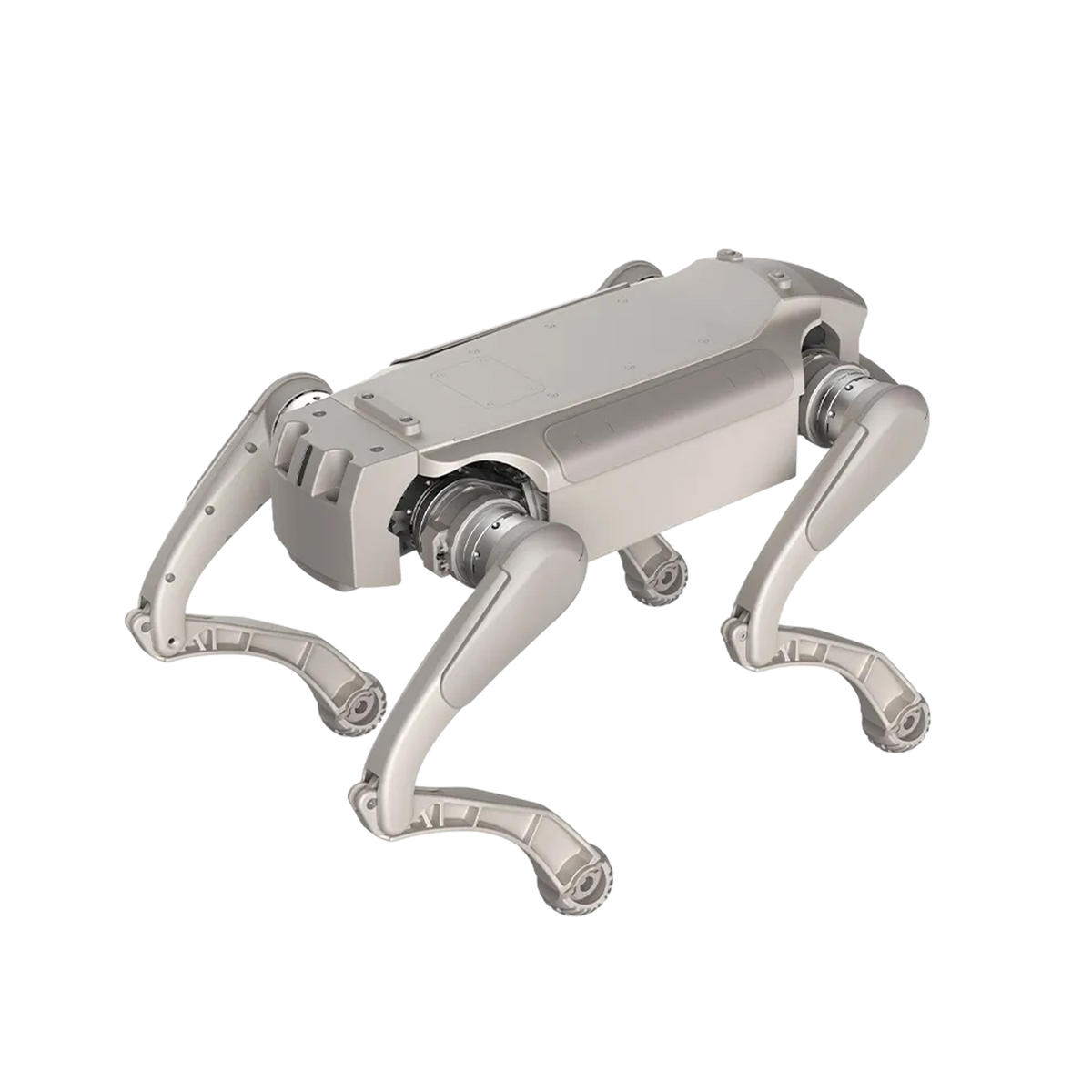
AgiBot Robotics
AgiBot D1 Ultra Quadruped Robot
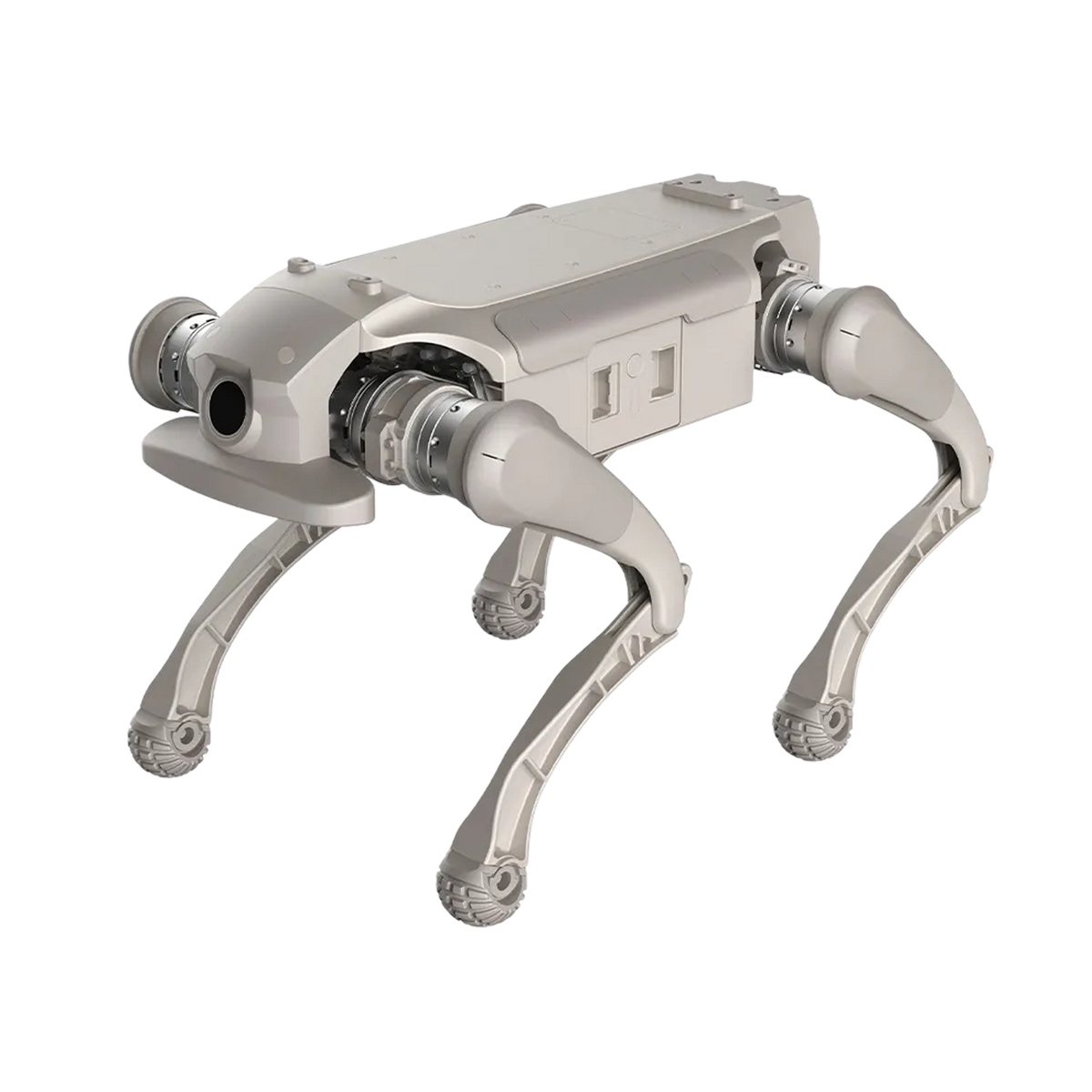
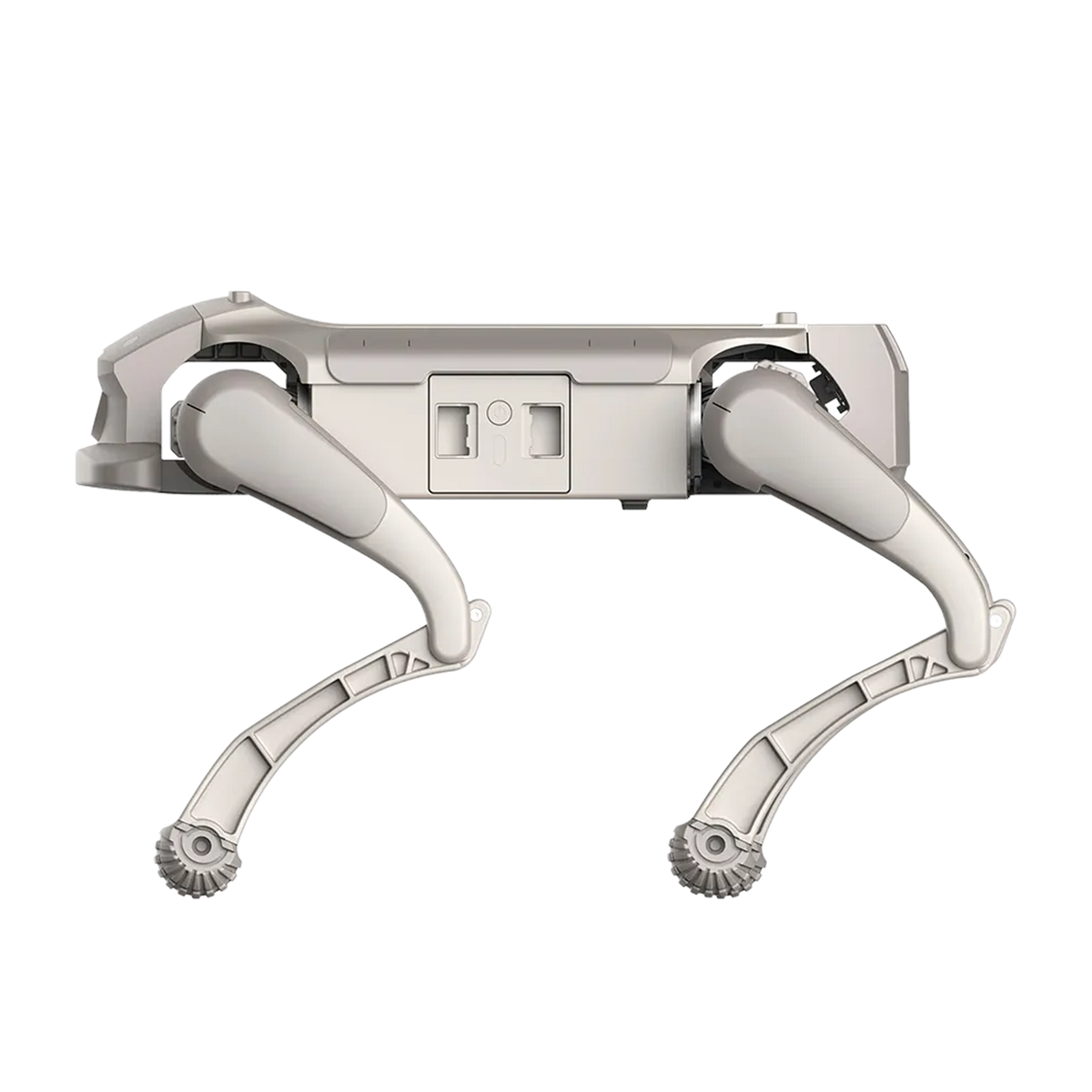
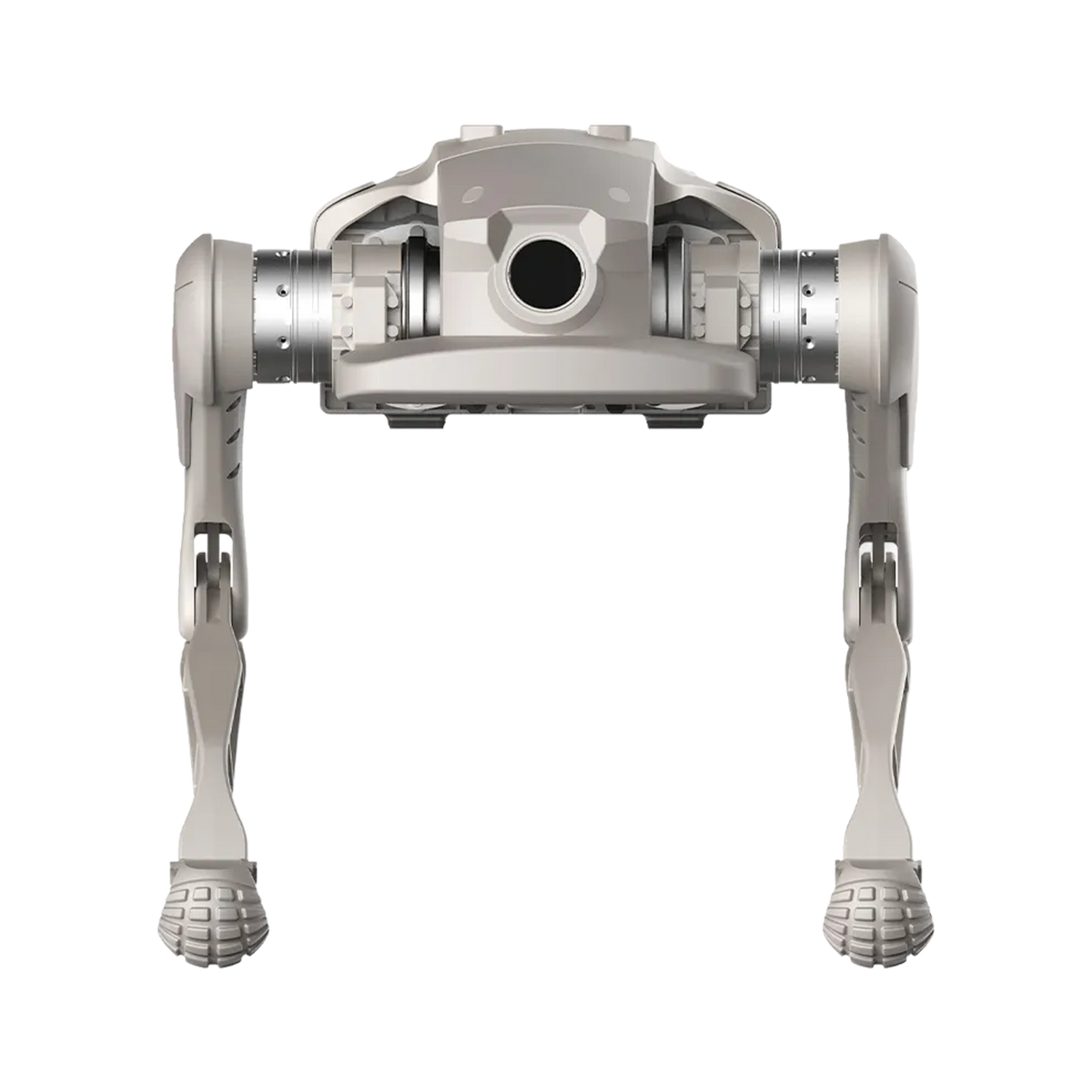
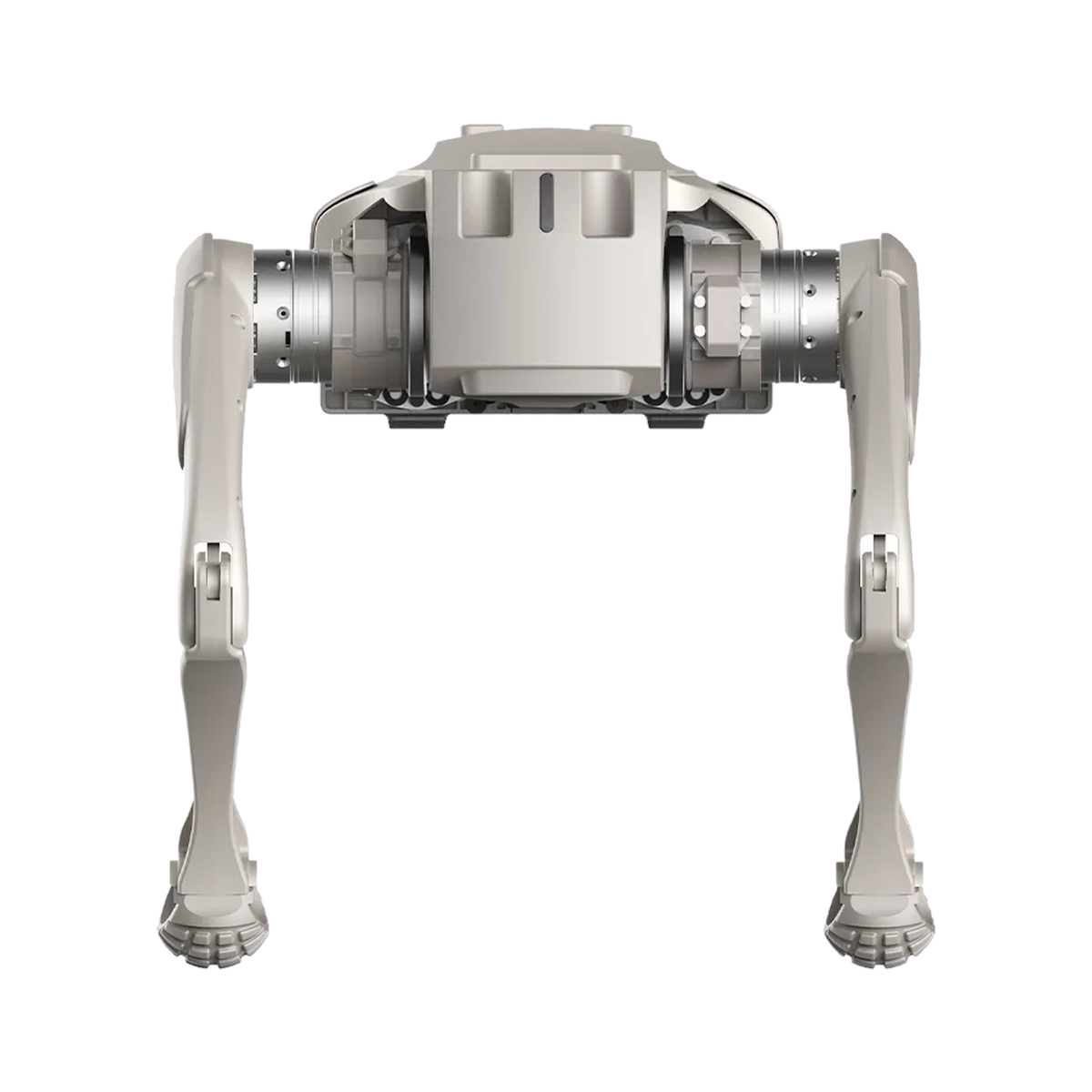
The D1 Ultra sits between the classroom D1 and the industrial D1 Max. It is a compact, fast, agile quadruped running an embedded reinforcement-learning motion algorithm that adapts to whatever surface it lands on, which in practice means stairs, rubble, gravel, and uneven ground without hand-tuning. AgiBot builds it on a joint system with 2 kW/kg specific power, and that is the reason a 16 kg (35 lb) robot sustains 3.7 m/s (8.3 mph) while still carrying a 5 kg (11 lb) payload.
What makes it a patrol machine rather than a demo machine is expandability. It takes LiDAR, RGB-D cameras, and other sensors through standard expansion ports, and AgiBot positions it explicitly for autonomous navigation, mapping and task-specific execution, so it can be built into a route-walking inspection or security platform rather than staying a stock robot. If you need IP67 protection, 25 kg (55 lb) of payload, or all-day endurance, step up to the D1 Max.
Key Highlights
- 3.7 m/s (8.3 mph) top speed with reinforcement-learning gait control for real-time balance across stairs, rubble, and uneven ground.
- Built for patrol, disaster response and search, which is how AgiBot positions it: staircases and complex rubble rather than a flat demonstration floor.
- 5 kg (11 lb) effective payload with standard expansion ports for LiDAR, RGB-D cameras, and mission sensors.
- 2 kW/kg specific power drive system, which is what buys the speed and payload at only 16 kg (35 lb).
- 16 cm (6.3 in) continuous stair climbing and a 30° standard climbing angle, up to 40° maximum.
- IP54 protection against dust and splashing water.
- A packaged patrol configuration with microphone, LiDAR, warning strobe and thermal camera, running about 45 minutes over roughly 4.7 km (2.9 mi).
- Verified US equipment authorization under FCC ID 2BTPT-ZYCXD105U.
- Secondary development supported with modular customization, so the platform can be adapted per site.
- Packs down to 145 mm (5.7 in) lying, so it fits a transport case and a vehicle trunk.
AgiBot D1 Ultra Specs
| Spec | Value |
|---|---|
| Standing dimensions (L × W × H) | 630 × 360 × 420 mm (24.8 × 14.2 × 16.5 in) |
| Lying dimensions (L × W × H) | 670 × 435 × 145 mm (26.4 × 17.1 × 5.7 in) |
| Total weight | 16 kg (35 lb) including battery |
| Maximum speed | 3.7 m/s (8.3 mph) |
| Effective payload | 5 kg (11 lb) |
| Operating range | About 4.7 km (2.9 mi) in AgiBot's configured patrol build. An earlier datasheet quoted approximately 6 km (3.7 mi) for the bare robot; that figure is not restated in the current brochure, so confirm with us before planning a route length |
| Battery life | 1 to 2 hours depending on load and terrain; about 45 minutes in the configured patrol build |
| Battery module | 4.6 Ah, 43.2 V |
| Continuous stair-climbing height | 16 cm (6.3 in) |
| Maximum climbing angle | 30° standard, up to 40° maximum |
| Operating temperature | 0°C to 40°C (32°F to 104°F) |
| Ingress protection | IP54 |
| Expansion ports | Ethernet, USB, power, SBUS, UART |
| Sensor compatibility | LiDAR, RGB-D cameras, and other mounted payloads |
| FCC ID | 2BTPT-ZYCXD105U |
US equipment authorization. The D1 Ultra carries FCC ID 2BTPT-ZYCXD105U, granted before the FCC's 28 July 2026 rule change. You can verify it yourself in the FCC's official equipment authorization database at apps.fcc.gov/oetcf/eas. We check every SKU we list against that database before we sell it.
Specifications per the AGIBOT D1 Ultra datasheet and AgiBot product documentation. Subject to change at final delivery.
The Security Patrol Configuration
AgiBot packages the D1 Ultra and Ultra-W as a small-format patrol robot, and that build is the one to quote against a real route. It carries a microphone, LiDAR, a warning strobe light and a thermal imaging camera, and the configured figures are noticeably more conservative than the bare-robot spec, which is what you want when you are planning a beat.
| Patrol spec | D1 Ultra / Ultra-W |
|---|---|
| Endurance, configured | About 45 minutes |
| Operating range, configured | About 4.7 km (2.9 mi) |
| Effective payload, configured | 5 kg (11 lb) |
| Protection rating, configured | IP54 |
Patrol software covers autonomous patrolling, autonomous obstacle avoidance, broadcast and intercom, video surveillance, image capture, facial detection, license plate detection, no-parking zone recognition, anomaly alerts and generated patrol reports, with inspection data stored in a structured format so a route can be reviewed afterwards.
Read the 45 minutes honestly. A patrol-configured D1 Ultra is a short-shift or on-call machine, not a 24/7 one. If you need continuous coverage of a large site, the D1 Max patrol build runs 2 hours or more over 20 km (12 mi) or more, carries 25 kg (55 lb) instead of 5 kg (11 lb), and adds autonomous following, which the D1 Ultra patrol build does not have.
Built For
- Security patrol and threat inspection across campuses, yards, and perimeters
- Disaster response and search missions across staircases, rubble and collapsed structures
- Rescue operations in environments that are unsafe to send a person into first
- Facility and site walks where a wheeled robot cannot handle stairs or rubble
- University and research labs building navigation, SLAM, and autonomy stacks on a mobile platform
- Public safety agencies evaluating quadrupeds before committing to an industrial-class unit
- Interactive entertainment and public engagement programs
Good to Know
- IP54 covers dust and splashing water. For rain, mud, wash-down, or heavy industrial environments, the IP67-rated D1 Max is the correct machine.
- Operating temperature is 0°C to 40°C (32°F to 104°F), so plan around sub-freezing deployments.
- Endurance is one to two hours bare, and about 45 minutes once a patrol payload is fitted. Tell us your route so we can confirm what is realistic before you commit.
- Sensors such as LiDAR and RGB-D cameras are mounted payloads and are quoted separately from the robot.
- This robot moves at 3.7 m/s (8.3 mph). Deployments near the public need a trained operator and clear right-of-way.
How Purchasing Works
Send us the quantity, any payload requirements, and the ship-to address and we return a formal written quote, typically the same or next business day. We support purchase orders from universities, municipalities, public safety agencies, and enterprise buyers, and we accept tax-exempt purchasing with a valid certificate on file.
Frequently Asked Questions
How much does the AgiBot D1 Ultra cost?
The D1 Ultra is $7,999. Multi-unit and fleet pricing is available on request.
Is the AgiBot D1 Ultra authorized for use in the US?
Yes. It carries FCC ID 2BTPT-ZYCXD105U, granted before the FCC's 28 July 2026 rule change. You can verify it directly in the FCC's equipment authorization database at apps.fcc.gov/oetcf/eas. Note that FCC equipment authorization is separate from NDAA procurement eligibility, which is a different question for federally funded buyers.
How far can it travel on one charge?
AgiBot's configured patrol build is specified at about 4.7 km (2.9 mi) on roughly 45 minutes. The bare robot runs one to two hours, and an earlier datasheet quoted approximately 6 km (3.7 mi), which the current brochure does not restate, so we treat that number as indicative and confirm per route.
What comes in the patrol configuration?
A microphone, LiDAR, a warning strobe light and a thermal imaging camera, with software for autonomous patrolling and obstacle avoidance, broadcast and intercom, video surveillance, image capture, facial and license plate detection, no-parking zone recognition, anomaly alerts and generated patrol reports.
How is the D1 Ultra different from the D1 Pro and D1 Edu?
The Ultra is slightly heavier at 16 kg (35 lb) versus 15.5 kg (34 lb), faster at 3.7 m/s (8.3 mph) versus 3.5 m/s (7.8 mph), and positioned by AgiBot for patrol, disaster response and rescue rather than classroom work. The Pro and Edu are the lower-cost entry points at $4,599 and $7,199. All three carry 5 kg (11 lb) and are IP54.
How is it different from the D1 Max?
Completely different class. The D1 Max is 41 kg (90 lb), IP67, carries 25 kg (55 lb) rated load, runs 3.5 hours under rated load, and switches between wheel and leg modes. Its patrol build runs 2 hours or more over 20 km (12 mi) or more and adds autonomous following. The Ultra is a 16 kg (35 lb) patrol and research robot at a fifth of the price.
Can it carry a LiDAR?
Yes. Effective payload is 5 kg (11 lb) and the standard expansion ports support LiDAR, RGB-D cameras, and other sensors. Payloads are quoted separately.
Can it climb stairs?
Yes, continuously up to 16 cm (6.3 in) per step, with a 30° standard climbing angle and up to 40° maximum.
Does it support programming and secondary development?
Yes. The D1 Ultra supports secondary development and modular customization through its standard expansion interfaces.
Is it waterproof?
It is IP54, rated for dust and splashing water, not immersion or pressure washing.
Do you accept purchase orders?
Yes. We work with universities, municipalities, and public safety agencies and accept POs and tax-exempt purchasing.
Is there US warranty support?
Yes. Units are sourced through AgiBot's authorized US distribution and carry US-based warranty and repair.
Warranty & U.S. Support
Every AgiBot unit we sell is sourced through AgiBot's authorized US distribution and carries US-based warranty and repair coverage. Global Drone HQ provides pre-sale configuration help and post-sale support directly, and we handle warranty coordination on your behalf. Purchase orders and tax-exempt purchasing are welcome for schools, universities, and public agencies.
Explore the AgiBot Lineup
Browse the full AgiBot robot collection, or compare with the D1 Pro and D1 Edu for classroom budgets, the D1 Max for industrial payloads, and the X2 humanoid for interactive deployments.
Verified US equipment authorization, FCC ID 2BTPT-ZYCXD105U
Sourced through AgiBot's US master distributor
Freight quoted to your destination
Purchase orders and tax-exempt purchasing welcome

Max speed

Effective payload

Weight with battery

Max climbing angle

US equipment authorization
Pairs well with
Questions about configuration, lead time or deployment? We reply within one business day.
-
Shipping and Delivery
Robots ship freight and insured to your dock or venue. Freight is quoted to your destination address and appears as a line item on your written quote. Lead time is confirmed in writing before you commit to a delivery date.
-
Support
You deal with Global Drone HQ directly, before and after the sale. We help you pick the right configuration, handle delivery and deployment, first-line troubleshooting and periodic inspection, and we coordinate anything that needs the factory rather than handing you an address overseas.
-
Warranty and Service
AgiBot is responsible for complete-machine warranty service, including repair or replacement of core components, software debugging and upgrades, and complex repairs that cannot be resolved through remote guidance. Global Drone HQ handles deployment, routine troubleshooting and on-site support. Units are sourced through AgiBot's US master distributor.
-
Contact Us
Email daniel@globaldronehq.com or call (858) 906-5185. Purchase orders and tax-exempt purchasing are welcome for schools, universities and public agencies.

Built for the ground that stops wheeled robots.
Reinforcement-learning gait control keeps the D1 Ultra upright on loose slopes, rubble and dense vegetation at up to 3.7 m/s (8.3 mph), with a 16 kg (35 lb) chassis that one person can carry to the start of the route.
3.7 m/s (8.3 mph) • 5 kg (11 lb) Payload • Patrol Ready • FCC Verified • Quotes & POs Welcome
Dig Deeper
Speed, Payload and Mobility
- 3.7 m/s (8.3 mph) top speed with reinforcement-learning gait control across stairs, rubble and uneven ground.
- 16 kg (35 lb) including battery, carrying a 5 kg (11 lb) effective payload.
- 2 kW/kg specific power drive system, which is what buys the speed and payload at this weight.
- 16 cm (6.3 in) continuous stair climbing, 30° standard climbing angle, up to 40° maximum.
- Packs down to 145 mm (5.7 in) lying, so it fits a transport case and a vehicle trunk.
The Patrol Configuration
- About 45 minutes and roughly 4.7 km (2.9 mi) in AgiBot's configured patrol build, carrying 5 kg (11 lb) at IP54.
- Sensors: microphone, LiDAR, warning strobe light and thermal imaging camera.
- Software: autonomous patrolling and obstacle avoidance, broadcast and intercom, video surveillance, image capture, facial and license plate detection, no-parking zone recognition, anomaly alerts and generated patrol reports.
- Structured inspection data, so a route can be reviewed and audited afterwards rather than existing only as video.
- Read the 45 minutes honestly. This is a short-shift or on-call machine. For continuous coverage of a large site, the D1 Max patrol build runs 2 hours or more over 20 km (12 mi) or more.
Expansion and Development
- Standard expansion ports: Ethernet, USB, power, SBUS and UART.
- Sensor compatibility with LiDAR, RGB-D cameras and other mounted payloads, quoted separately.
- Secondary development supported with modular customization, so the platform can be adapted per site.
- IP54 and 0°C to 40°C (32°F to 104°F). For rain, mud, wash-down or sub-freezing work, the IP67 D1 Max is the correct machine.
Compare the D1 Lineup
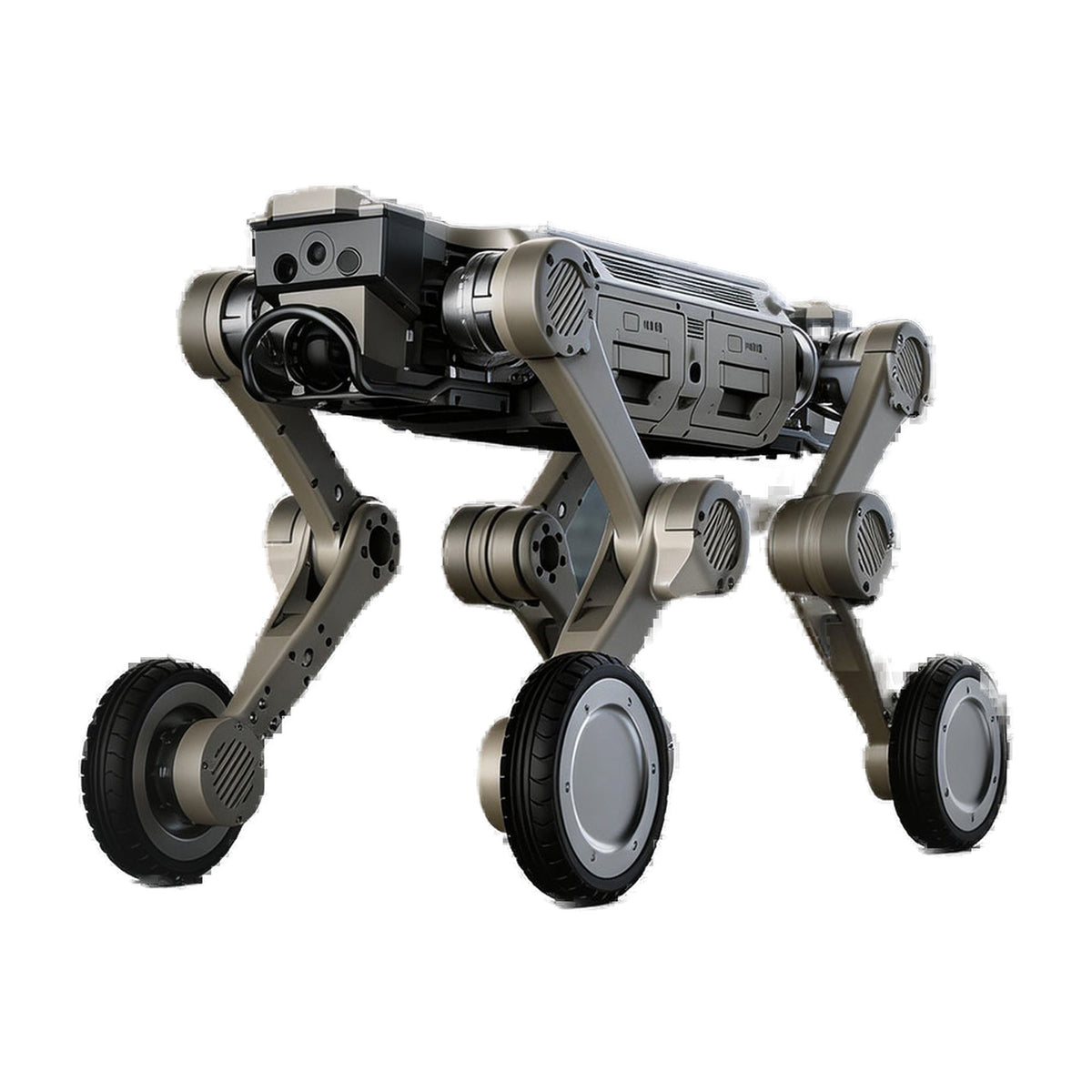
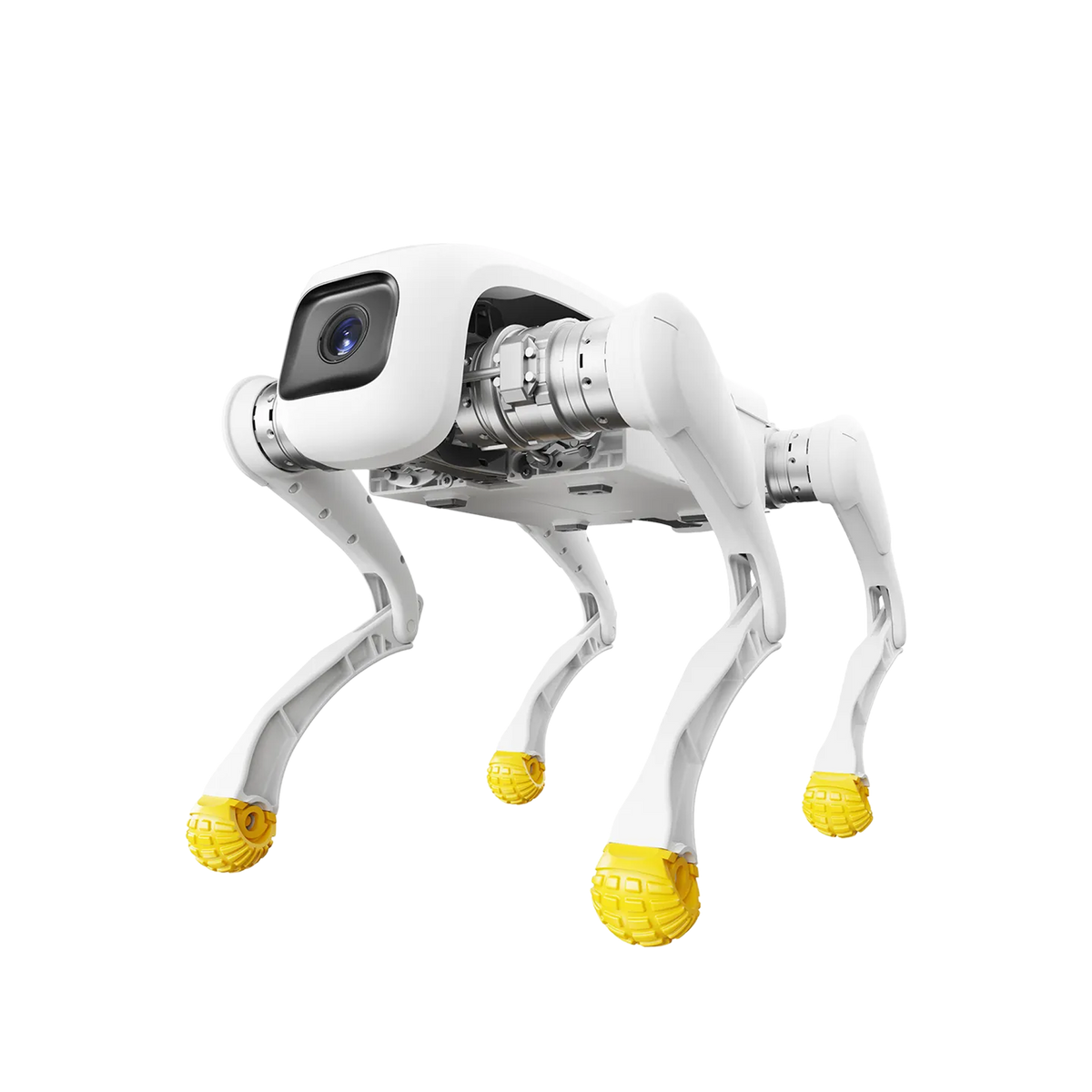
Three very different machines that share a name. Protection rating and endurance are quoted for the configured build, not the bare chassis.
Weight
41 kg (90 lb)
Weight
16 kg (35 lb)
Weight
15.5 kg (34 lb)
Top Speed
6 m/s (13.4 mph) max wheel speed
Top Speed
3.7 m/s (8.3 mph)
Top Speed
3.5 m/s (7.8 mph)
Rated Payload
25 kg (55 lb) rated
Rated Payload
5 kg (11 lb)
Rated Payload
5 kg (11 lb)
Protection
IP67 bare / IP66 inspection / IP55 patrol
Protection
IP54
Protection
IP54
Endurance
3.5 h at rated load
Endurance
1–2 h bare, ~45 min patrol
Endurance
1–2 h
Locomotion
Wheel and leg modes
Locomotion
Legged
Locomotion
Legged
Operating Temp
-20°C to 55°C (-4°F to 131°F)
Operating Temp
0°C to 40°C (32°F to 104°F)
Operating Temp
0°C to 40°C (32°F to 104°F)
Best For
Industrial inspection and patrol
Best For
Patrol, disaster response, research
Best For
Education, demos, events
Price
$42,999
Price
$7,999
Price
From $4,599
FAQs
Is the D1 Ultra authorized for use in the US?
Yes. FCC ID 2BTPT-ZYCXD105U, granted before the FCC's 28 July 2026 rule change, verifiable at apps.fcc.gov/oetcf/eas. FCC authorization is separate from NDAA procurement eligibility.
How far can it travel on one charge?
AgiBot's configured patrol build is specified at about 4.7 km (2.9 mi) on roughly 45 minutes. The bare robot runs one to two hours. An earlier datasheet quoted approximately 6 km (3.7 mi), which the current brochure does not restate, so we confirm per route.
What comes in the patrol configuration?
A microphone, LiDAR, a warning strobe light and a thermal imaging camera, with software for autonomous patrolling, obstacle avoidance, broadcast and intercom, video surveillance, image capture, facial and license plate detection, no-parking zone recognition, anomaly alerts and patrol reports.
How is it different from the D1 Max?
Different classes. The D1 Max is 41 kg (90 lb), IP67, carries 25 kg (55 lb) and switches between wheel and leg modes, with a patrol build running 2 hours or more over 20 km (12 mi) or more plus autonomous following. The Ultra is a 16 kg (35 lb) patrol and research robot at a fifth of the price.
Can it carry a LiDAR?
Yes. Effective payload is 5 kg (11 lb) and the standard expansion ports support LiDAR, RGB-D cameras and other sensors, which are quoted separately.
Is it waterproof?
It is IP54, rated for dust and splashing water, not immersion or pressure washing. Operating range is 0°C to 40°C (32°F to 104°F).