


AgiBot Robotics
AgiBot D1 Max Wheel-Leg Quadruped Robot
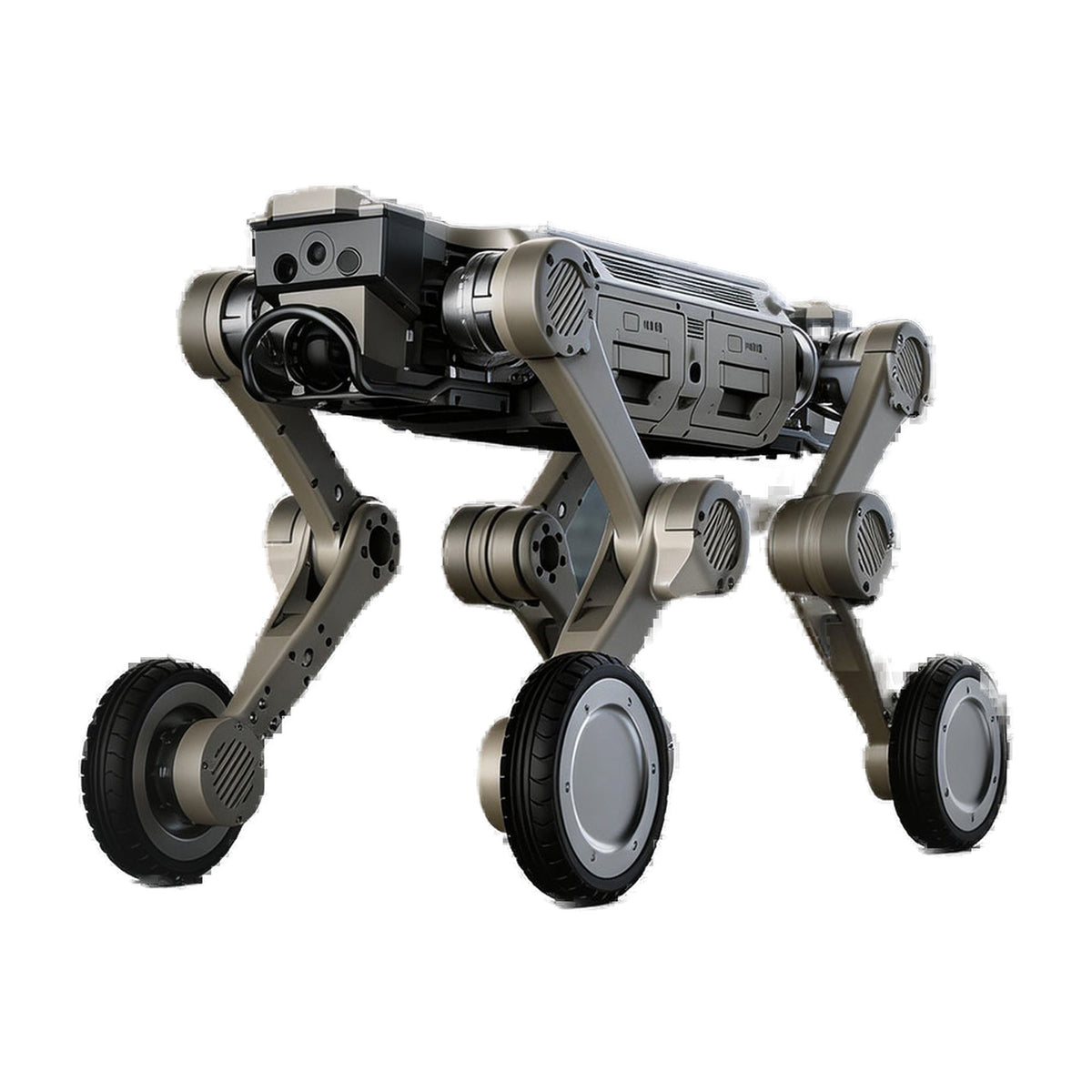
The D1 Max is the industrial member of the D1 family, and the specification that separates it from every other robot on this page is payload: 25 kg (55 lb) rated, on a chassis that weighs only 41 kg (90 lb) itself, which AgiBot markets as a near 1:1 load-to-weight ratio and roughly a 50% improvement on comparable machines. It runs an embedded reinforcement-learning motion model with impact resistance, disturbance rejection, self-righting after falls, and dynamic self-adaptation, and it carries a full perception suite of vision, LiDAR, ultrasonic, and IMU sensors for environmental reconnaissance, autonomous navigation, and target recognition.
The second thing that sets it apart is the drivetrain. The D1 Max switches intelligently between wheel mode and leg mode, wheels for stable, efficient, long-endurance movement on flat ground, legs for terrain that defeats wheels. Combined with dual hot-swappable batteries, that is what makes it deployable on a real inspection route: over 5 hours of endurance and 29 km (18 mi) of range unloaded, and a stable 3.5 hours with 18 km (11 mi) under rated payload. IP67 protection means it works outdoors and in industrial environments all year.
Key Highlights
- 25 kg (55 lb) rated payload on a 41 kg (90 lb) chassis, with Gigabit Ethernet, USB and serial communication plus a 5V/12V/24V/48V, 480 W power interface for deep industrial integration.
- Wheel and leg mode switching: wheels for efficient distance, legs for terrain, selected intelligently rather than manually.
- 6 m/s (13.4 mph) maximum wheel speed for fast response and broad route coverage.
- Rated -20°C to 55°C (-4°F to 131°F), which is what separates it from the IP54 D1 models and makes winter deployment realistic.
- IP67 rated for long-term outdoor and industrial operation, reducing downtime and maintenance cost.
- Dual hot-swappable batteries (504.9 Wh × 2), so the robot returns to service without waiting on a charge cycle.
- Over 5 hours endurance and 29 km (18 mi) range unloaded; 3.5 hours and no less than 18 km (11 mi) under rated payload.
- 45° maximum climbing angle, 25 cm (10 in) continuous stair climbing, and 80 cm (31 in) obstacle crossing.
- Full perception suite, vision, LiDAR, ultrasonic, and IMU, supporting autonomous navigation and target recognition.
- Verified US equipment authorization under FCC ID 2BTPT-ZYCXD125M.
- Self-rights after falls and rejects disturbance, validated for high-intensity deployment.
AgiBot D1 Max Specs
| Spec | Value |
|---|---|
| Weight | 41 kg (90 lb) |
| Rated load | 25 kg (55 lb) |
| Load-bearing span | 50 cm (20 in) |
| Maximum wheel speed | 6 m/s (13.4 mph) |
| Standing dimensions (L × W × H) | 920 × 480 × 585 mm (36.2 × 18.9 × 23.0 in) |
| Folded dimensions (L × W × H) | 930 × 630 × 200 mm (36.6 × 24.8 × 7.9 in) |
| Operating temperature | -20°C to 55°C (-4°F to 131°F) |
| Load endurance | 3.5 h at rated payload, over 5 h unloaded |
| Operating range | At least 20 km (12 mi) in the inspection configuration; over 29 km (18 mi) unloaded and no less than 18 km (11 mi) at rated payload per the D1 Max datasheet |
| Battery module capacity | 504.9 Wh × 2, hot-swappable |
| Continuous stair-climbing height | 25 cm (10 in) |
| Maximum climbing angle | 45° |
| Obstacle crossing height | 80 cm (31 in) |
| Locomotion modes | Intelligent wheel and leg mode switching |
| Ingress protection | IP67 |
| Perception suite | Vision, LiDAR, ultrasonic, IMU |
| Autonomy | Environmental reconnaissance, autonomous navigation, target recognition |
| External expansion interface | Gigabit Ethernet, USB and serial port; power 5V / 12V / 24V / 48V at 480 W |
| FCC ID | 2BTPT-ZYCXD125M |
US equipment authorization. The D1 Max carries FCC ID 2BTPT-ZYCXD125M, granted before the FCC's 28 July 2026 rule change. You can verify it yourself in the FCC's official equipment authorization database at apps.fcc.gov/oetcf/eas. We check every SKU we list against that database before we sell it.
Specifications per the AGIQUAD D1 Max brochure. Subject to change at final delivery.
The Industrial Inspection Configuration
AgiBot builds the D1 Max into a packaged inspection solution, and it is worth quoting that way rather than as a bare chassis. The configured system runs 50+ general inspection algorithms with five-gas detection covering O2, CO, SO2, CH4 and SF6, and it is the configuration the accuracy figures below apply to.
| Inspection spec | Value |
|---|---|
| Endurance, configured | 2 h or more |
| Operating range, configured | 20 km (12 mi) or more |
| Effective payload, configured | 25 kg (55 lb) |
| Protection rating, configured | IP66 with the gimbal and sensors mounted |
| Temperature accuracy | ±2°C (±3.6°F) |
| Positioning accuracy | Under 3 cm (1.2 in) |
| Gimbal control accuracy | 0.1° |
| Gas detection | O2, CO, SO2, CH4, SF6 |
Standard configuration: dual-spectrum gimbal, gas detector, LiDAR.
Optional: robotic arm, partial discharge detector, acoustic signature sensor.
AgiBot also offers wireless bridge and 5G communication modules on this platform. We do not quote radio accessories until they carry their own US equipment authorization, so ask us and we will tell you exactly where that stands before you design a comms plan around it.
The software side is what makes it a route rather than a demo: offline mission planning, a three-axis stabilized gimbal, starlight night-vision camera, partial discharge monitoring, inspection result analysis, and a real-time monitoring display. AgiBot reports roughly double the operational efficiency of manual rounds and about half the delivery cycle time from offline mission planning.
The Security Patrol Configuration
The same chassis is also packaged as a patrol robot, and it is a different sensor set from the inspection build. Patrol adds a microphone, a long-range LiDAR, a binocular gimbal, a warning strobe light and a thermal imaging camera, and the D1 Max patrol solution supports autonomous following, which the smaller D1 Ultra patrol build does not.
| Patrol spec | D1 Max | D1 Ultra, for comparison |
|---|---|---|
| Endurance, configured | 2 h or more | About 45 min |
| Operating range, configured | 20 km (12 mi) or more | About 4.7 km (2.9 mi) |
| Effective payload, configured | 25 kg (55 lb) | 5 kg (11 lb) |
| Protection rating, configured | IP55 with the patrol payload mounted | IP54 |
Patrol software covers autonomous patrolling, autonomous obstacle avoidance, broadcast and intercom, video surveillance, image capture, facial detection, license plate detection, no-parking zone recognition, anomaly alerts and generated patrol reports. Inspection data is stored in a structured format, so a route can be replayed and audited after the fact rather than existing only as video.
Note the protection rating. The bare robot is IP67, the configured inspection build is IP66 and the configured patrol build is IP55, because the mounted payload sets the rating rather than the chassis. Specify the environment you are deploying into and we will confirm which build actually meets it.
Built For
- Industrial inspection routes: meter reading, defect detection, and abnormal temperature sensing
- Security patrol, threat inspection, on-site management, and critical point deployment
- Energy and utility sites where a payload has to be walked to places vehicles cannot reach
- Logistics and materials handling that need 25 kg (55 lb) carried over terrain rather than pavement
- Plant, refinery, and substation operators replacing manual rounds with a repeatable robotic route
- Integrators building a custom sensor or manipulator payload on a proven mobile base
Good to Know
- Rated load is 25 kg (55 lb), and that is the figure every endurance and range number here is based on. Ignore any larger payload figure you may see quoted elsewhere unless AgiBot confirms it in writing for your configuration.
- Wheel mode delivers the range and efficiency numbers; leg mode trades endurance for terrain capability. Route planning should account for the mix.
- The robot is IP67. The complete industrial inspection package, with the gimbal and sensors mounted, is rated IP66, and the patrol package is rated IP55. Mounted third-party payloads carry their own ratings, so check the whole stack rather than just the chassis.
- At 41 kg (90 lb) moving up to 6 m/s (13.4 mph), this is an industrial machine. Site safety procedures, trained operators, and exclusion zones are appropriate.
- Charging docks, spare batteries, and sensor payloads are quoted separately. Tell us the route and we will spec the whole deployment.
How Purchasing Works
The D1 Max is quoted per deployment rather than sold from a cart, because payload, sensors, charging, and spares change the answer. Send us the site, the route, and what the robot needs to carry, and we return a formal written quote, typically the same or next business day. We support purchase orders from utilities, municipalities, public agencies, and enterprise procurement, and we accept tax-exempt purchasing with a valid certificate on file.
Frequently Asked Questions
How much does the AgiBot D1 Max cost?
The D1 Max is $42,999 before payloads and accessories. Deployments are quoted individually because sensors, charging, and spares vary by site.
Is the AgiBot D1 Max authorized for use in the US?
Yes. It carries FCC ID 2BTPT-ZYCXD125M, granted before the FCC's 28 July 2026 rule change. You can verify it directly in the FCC's equipment authorization database at apps.fcc.gov/oetcf/eas. Note that FCC equipment authorization is separate from NDAA procurement eligibility, which is a different question for federally funded buyers.
How much can it actually carry?
Rated load is 25 kg (55 lb) on a 41 kg (90 lb) chassis, and that is the figure the endurance and range specifications are based on. AgiBot markets this as a near 1:1 load-to-weight ratio and about a 50% improvement over comparable machines.
What is the difference between the inspection and patrol configurations?
Different payloads on the same robot. The inspection build carries a dual-spectrum gimbal, gas detector and LiDAR, runs 50+ inspection algorithms with five-gas detection, and is rated IP66 configured. The patrol build carries a microphone, long-range LiDAR, binocular gimbal, strobe and thermal camera, adds autonomous following and patrol analytics, and is rated IP55 configured. Both run 2 hours or more over 20 km (12 mi) or more.
What is wheel and leg mode switching?
The D1 Max can roll on wheels or walk on legs and selects intelligently between them. Wheel mode gives stable, efficient movement with extended endurance on flat ground; leg mode handles stairs, rubble, and terrain that stops wheeled robots.
How long does it run per charge?
Over 5 hours unloaded and a stable 3.5 hours at rated payload, covering more than 29 km (18 mi) unloaded and no less than 18 km (11 mi) loaded. Dual batteries are hot-swappable, so the robot goes back out without waiting on a charger.
Can it work outdoors in bad weather?
Yes. The D1 Max is IP67 rated for long-term outdoor and industrial operation, and it is rated from -20°C to 55°C (-4°F to 131°F). Note that mounted third-party sensors carry their own protection ratings, and the complete inspection package is rated IP66.
Can it climb stairs?
Yes, continuously up to 25 cm (10 in) per step, with 45° slope walking capability and 80 cm (31 in) obstacle clearance.
Does it navigate autonomously?
It carries a full perception suite of vision, LiDAR, ultrasonic, and IMU sensors supporting environmental reconnaissance, autonomous navigation, and target recognition. Tell us your route and we will confirm what is achievable on your site.
Can we integrate our own payload?
Yes. The D1 Max exposes communication, power, and control interfaces intended for secondary development and industrial integration, including Gigabit Ethernet, USB and serial, and a 5V to 48V, 480 W power interface.
How does it compare to the D1 Ultra?
Different classes entirely. The D1 Ultra is a 16 kg (35 lb), IP54, 5 kg (11 lb)-payload patrol and research robot at $7,999. The D1 Max is a 41 kg (90 lb) IP67 industrial platform carrying 25 kg (55 lb) with 3.5 hours of loaded endurance.
Do you accept purchase orders?
Yes. We work with utilities, municipalities, and enterprise procurement teams and accept POs and tax-exempt purchasing.
Is there US warranty support?
Yes. Units are sourced through AgiBot's authorized US distribution and carry US-based warranty and repair.
Warranty & U.S. Support
Every AgiBot unit we sell is sourced through AgiBot's authorized US distribution and carries US-based warranty and repair coverage. Global Drone HQ provides pre-sale configuration help and post-sale support directly, and we handle warranty coordination on your behalf. Purchase orders and tax-exempt purchasing are welcome for schools, universities, and public agencies.
Explore the AgiBot Lineup
Browse the full AgiBot robot collection, or compare with the D1 Ultra for patrol work at a fraction of the cost, the D1 Pro and D1 Edu for education, and the X2 humanoid for interactive deployments.
Verified US equipment authorization, FCC ID 2BTPT-ZYCXD125M
Sourced through AgiBot's US master distributor
Freight quoted to your destination
Purchase orders and tax-exempt purchasing welcome

Rated payload

Max wheel speed

Bare chassis protection

Endurance at rated load

US equipment authorization
Pairs well with
Questions about configuration, lead time or deployment? We reply within one business day.
-
Shipping and Delivery
Robots ship freight and insured to your dock or venue. Freight is quoted to your destination address and appears as a line item on your written quote. Lead time is confirmed in writing before you commit to a delivery date.
-
Support
You deal with Global Drone HQ directly, before and after the sale. We help you pick the right configuration, handle delivery and deployment, first-line troubleshooting and periodic inspection, and we coordinate anything that needs the factory rather than handing you an address overseas.
-
Warranty and Service
AgiBot is responsible for complete-machine warranty service, including repair or replacement of core components, software debugging and upgrades, and complex repairs that cannot be resolved through remote guidance. Global Drone HQ handles deployment, routine troubleshooting and on-site support. Units are sourced through AgiBot's US master distributor.
-
Contact Us
Email daniel@globaldronehq.com or call (858) 906-5185. Purchase orders and tax-exempt purchasing are welcome for schools, universities and public agencies.

25 kg (55 lb) of payload. 6 m/s (13.4 mph) on wheels. IP67 all year.
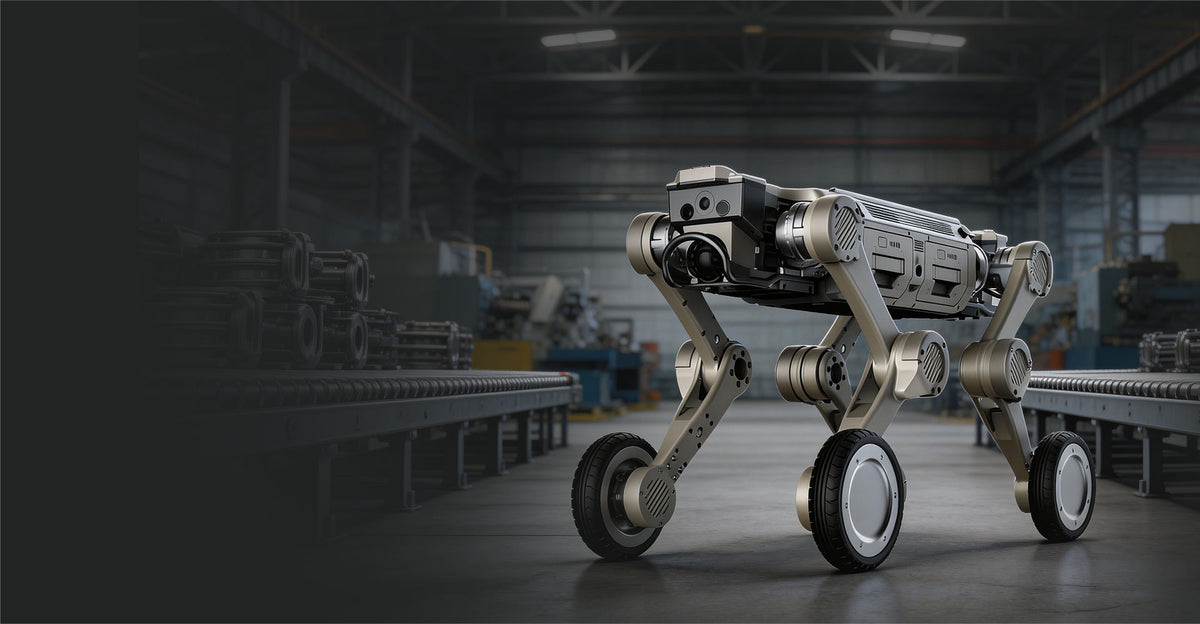
Wheels for the route. Legs for the terrain.
Built for the rounds nobody wants to walk twice a day.

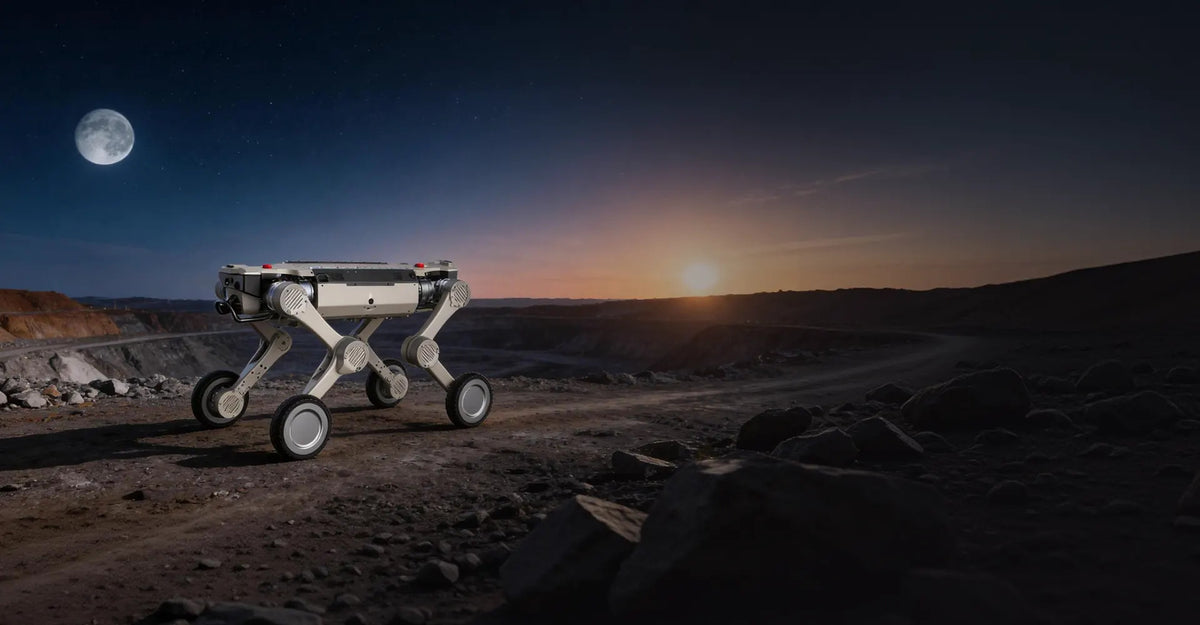
Wheels for distance. Legs for everything else.
The D1 Max rolls at up to 6 m/s (13.4 mph) on flat ground and switches to legs the moment the route stops being flat. It climbs 45° slopes, takes 25 cm (10 in) stairs continuously and clears 80 cm (31 in) obstacles, and it chooses the mode itself rather than waiting for an operator to.

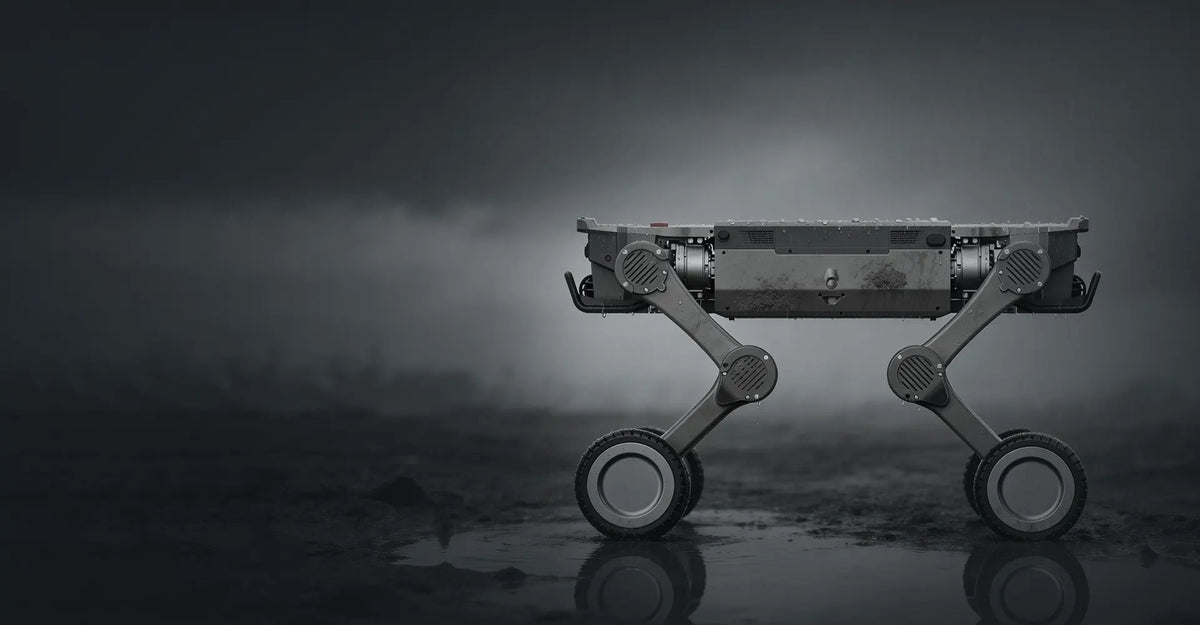
IP67, and rated from -20°C to 55°C
The bare chassis is sealed to IP67 and rated from -20°C to 55°C (-4°F to 131°F), which is what separates it from the IP54 D1 models and makes a winter deployment realistic. Configured with the inspection payload it carries IP66; with the patrol payload, IP55. Tell us the environment and we will confirm which build actually meets it.
Built for the plant, the substation and the perimeter.
The D1 Max is the industrial member of the D1 family: a 41 kg (90 lb) chassis carrying a 25 kg (55 lb) rated payload, with a full perception suite of vision, LiDAR, ultrasonic and IMU for autonomous navigation and target recognition.


Five hours. Twenty-nine kilometers. Then swap and go again.
Over 5 hours and 29 km (18 mi) of range unloaded, and a stable 3.5 hours with 18 km (11 mi) under the full 25 kg (55 lb) payload. The two 504.9 Wh batteries are hot-swappable, so the robot goes back out without waiting on a charge cycle.

Autonomous navigation, obstacle avoidance and a dock to come home to
Real-time dynamic obstacle avoidance and a full perception suite support autonomous navigation and target recognition on a repeatable route. With the optional charging dock, the D1 Max returns to charge on its own. Tell us the route and we will confirm what is achievable on your site before you commit.
25 kg (55 lb) Payload • IP67 • Wheel + Leg Modes • FCC Verified • Quotes & POs Welcome

One chassis. Two configured missions.
AgiBot packages the D1 Max as an industrial inspection robot, with 50+ inspection algorithms and five-gas detection, and as a security patrol robot with a thermal camera, long-range LiDAR, warning strobe and autonomous following. Both configured builds run 2 hours or more over 20 km (12 mi) or more. We quote the configuration, not the bare chassis.
Dig Deeper
Payload and Drivetrain
- 25 kg (55 lb) rated payload on a 41 kg (90 lb) chassis, a near 1:1 load-to-weight ratio.
- Wheel and leg mode switching, selected intelligently rather than manually.
- 6 m/s (13.4 mph) maximum wheel speed for fast response and broad route coverage.
- 45° climbing angle, 25 cm (10 in) continuous stair climbing and 80 cm (31 in) obstacle crossing.
- Gigabit Ethernet, USB and serial plus a 5V/12V/24V/48V 480 W power interface.
Endurance and Protection
- Over 5 hours and 29 km (18 mi) unloaded; a stable 3.5 hours and no less than 18 km (11 mi) at rated payload.
- Dual hot-swappable batteries, 504.9 Wh each, so the robot returns to service without waiting on a charge.
- IP67 bare chassis. The configured inspection build is IP66 and the configured patrol build is IP55, because the mounted payload sets the rating.
- Rated -20°C to 55°C (-4°F to 131°F), which makes winter deployment realistic.
- Self-rights after falls and rejects disturbance.
Inspection vs Patrol Configuration
- Inspection: 50+ algorithms, five-gas detection (O₂, CO, SO₂, CH₄, SF₆), ±2°C (±3.6°F) temperature accuracy, under 3 cm (1.2 in) positioning, 0.1° gimbal control. IP66 configured.
- Inspection kit: dual-spectrum gimbal, gas detector, LiDAR. Optional robotic arm, partial discharge detector, acoustic signature sensor.
- Patrol: microphone, long-range LiDAR, binocular gimbal, warning strobe, thermal camera, plus autonomous following. IP55 configured.
- Both configured builds run 2 hours or more over 20 km (12 mi) or more with a 25 kg (55 lb) effective payload.
- Radio accessories such as wireless bridge and 5G modules are not quoted until they carry their own US equipment authorization.
Compare the D1 Lineup
Three very different machines that share a name. Protection rating and endurance are quoted for the configured build, not the bare chassis.
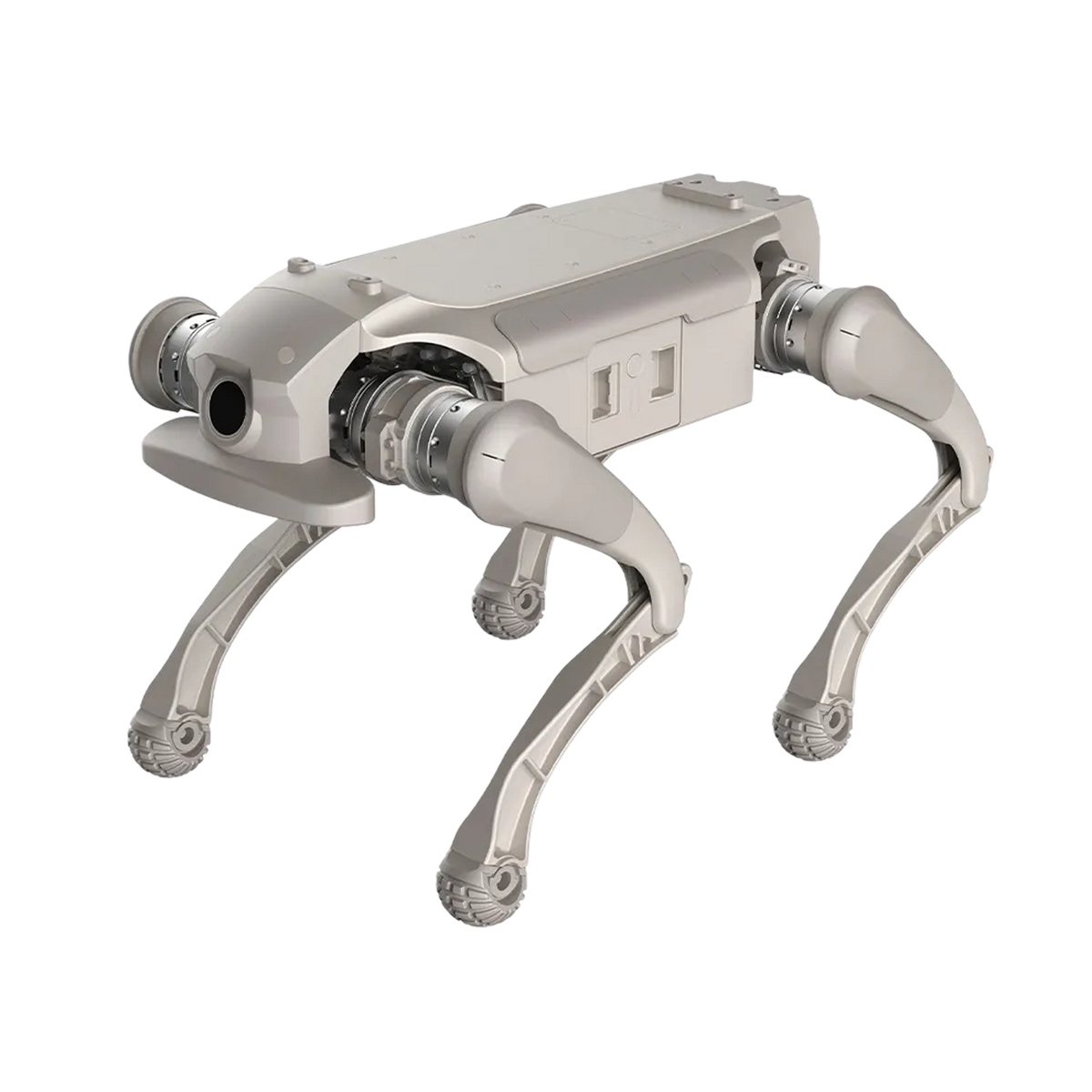
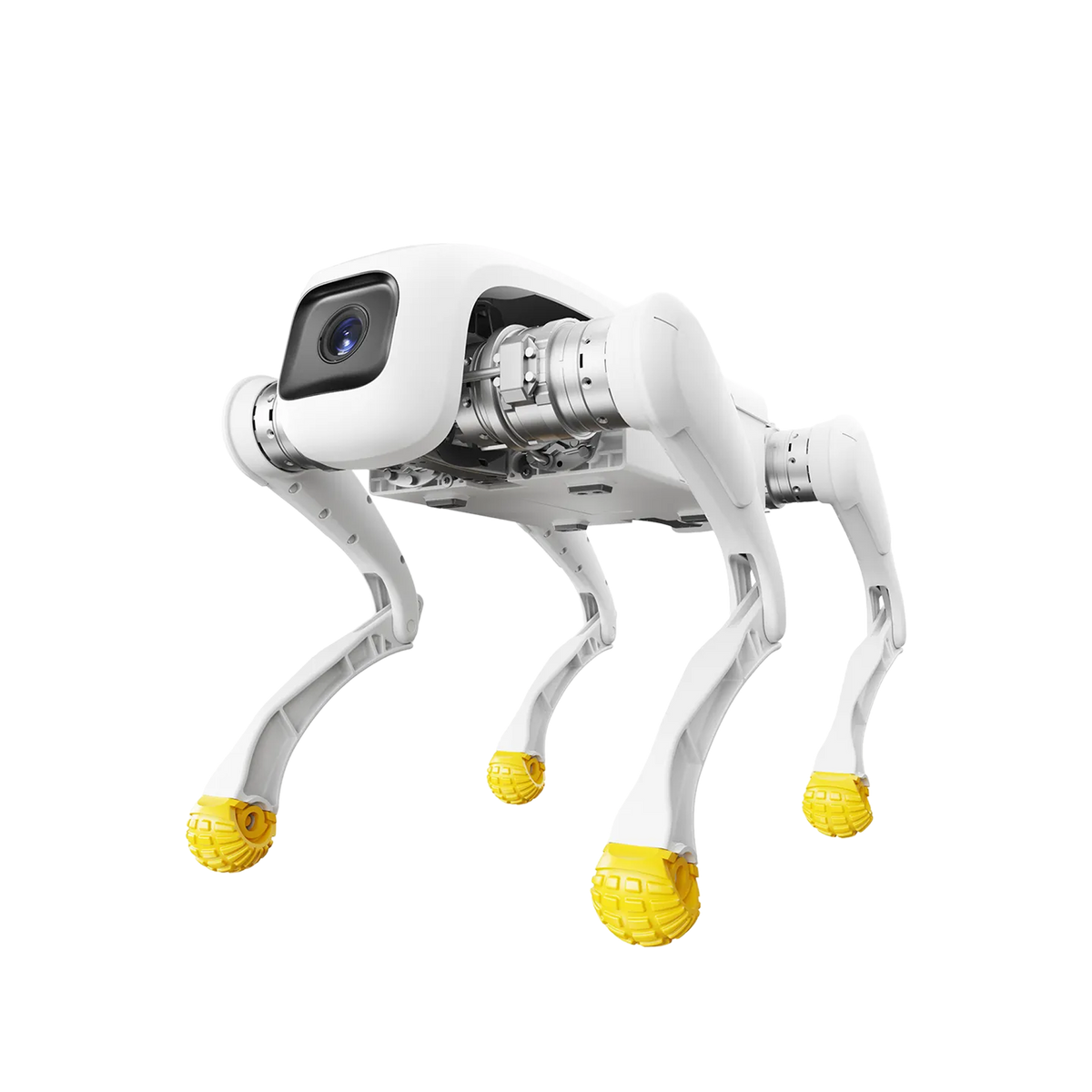
Weight
41 kg (90 lb)
Weight
16 kg (35 lb)
Weight
15.5 kg (34 lb)
Top Speed
6 m/s (13.4 mph) max wheel speed
Top Speed
3.7 m/s (8.3 mph)
Top Speed
3.5 m/s (7.8 mph)
Rated Payload
25 kg (55 lb) rated
Rated Payload
5 kg (11 lb)
Rated Payload
5 kg (11 lb)
Protection
IP67 bare / IP66 inspection / IP55 patrol
Protection
IP54
Protection
IP54
Endurance
3.5 h at rated load
Endurance
1–2 h bare, ~45 min patrol
Endurance
1–2 h
Locomotion
Wheel and leg modes
Locomotion
Legged
Locomotion
Legged
Operating Temp
-20°C to 55°C (-4°F to 131°F)
Operating Temp
0°C to 40°C (32°F to 104°F)
Operating Temp
0°C to 40°C (32°F to 104°F)
Best For
Industrial inspection and patrol
Best For
Patrol, disaster response, research
Best For
Education, demos, events
Price
$42,999
Price
$7,999
Price
From $4,599
FAQs
How much can it actually carry?
Rated load is 25 kg (55 lb) on a 41 kg (90 lb) chassis, and that is the figure every endurance and range number is based on.
Is the D1 Max authorized for use in the US?
Yes. FCC ID 2BTPT-ZYCXD125M, granted before the FCC's 28 July 2026 rule change, verifiable at apps.fcc.gov/oetcf/eas. FCC authorization is separate from NDAA procurement eligibility.
What is wheel and leg mode switching?
The robot rolls on wheels or walks on legs and selects between them intelligently. Wheels give efficient distance on flat ground; legs handle stairs, rubble and terrain that stops wheeled robots.
How long does it run per charge?
Over 5 hours unloaded and a stable 3.5 hours at rated payload, covering more than 29 km (18 mi) unloaded and no less than 18 km (11 mi) loaded. Dual batteries are hot-swappable.
What is the real IP rating?
IP67 for the bare robot, IP66 for the configured inspection build and IP55 for the configured patrol build. Tell us the environment and we will confirm which build meets it.
Can we integrate our own payload?
Yes. Gigabit Ethernet, USB and serial, plus a 5V to 48V 480 W power interface, are intended for secondary development and industrial integration.