

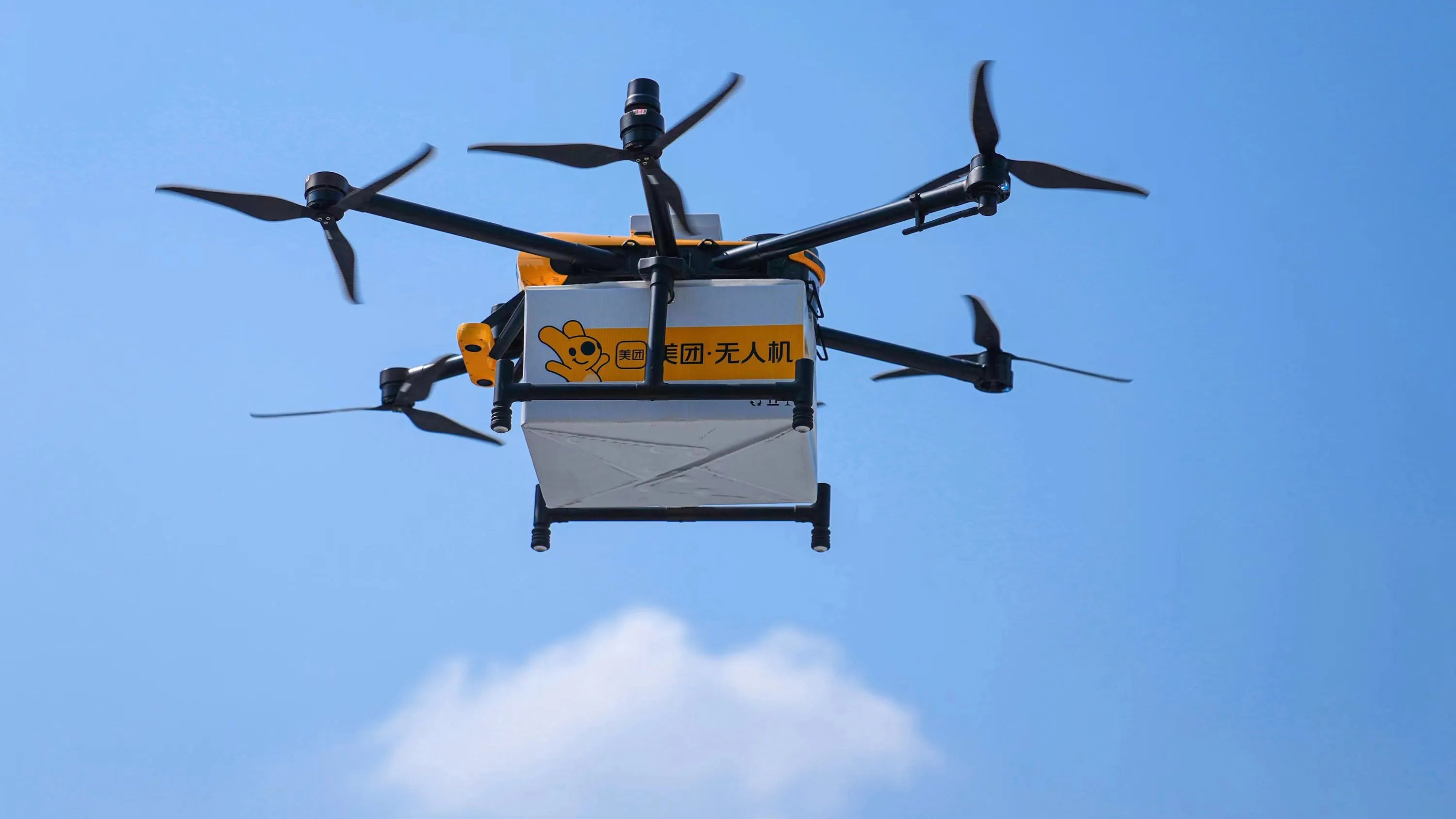
Heavy-lift drones are emerging as a game-changer in industrial logistics, capable of carrying tens or even hundreds of kilograms. These robust drones are filling a critical gap between small delivery UAVs and traditional transport like trucks or helicopters. By enabling faster, safer deliveries to remote sites and between facilities, drones are transforming how industries move heavy goods by air.
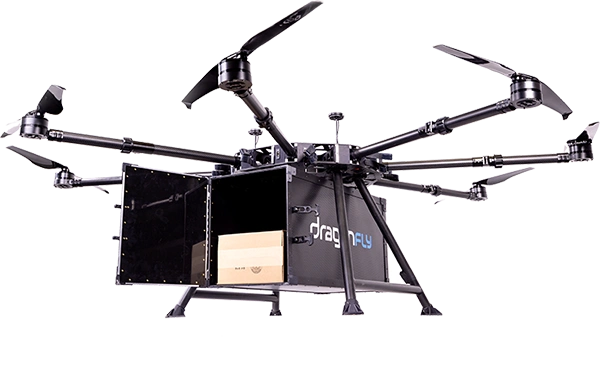
This article will explore how heavy-lift drones are being applied in logistics today, the benefits they offer, and what the future holds for this rapidly growing technology.
Heavy Lift Drones: Industrial Logistics and Their Impact on Industrial Supply Chains
Heavy-lift drones are changing the logistics landscape by improving efficiency and enhancing safety. They enable efficient transportation of goods across industrial supply chains.
Faster Deliveries and On-Demand Supply
Heavy-lift drones can significantly boost efficiency by reducing delivery times and labor costs. They can fly direct, point-to-point routes over congested roads or challenging terrain, enabling a delivery that might take hours by truck to be completed in a matter of minutes. This allows for on-demand logistics, ensuring a critical 20 kg part can be delivered to a factory exactly when needed, avoiding costly downtime.
Heavy-lift drones are revolutionizing delivery services by providing rapid, flexible, and cost-effective solutions for industrial logistics, making last-mile delivery faster and more efficient.
Early studies show that drone deliveries can drastically cut costs per shipment and support more agile, just-in-time supply chains.
Enhancing Safety in Operations
Crucially, heavy-lift drones enhance safety by removing humans from hazardous transport scenarios. They can perform tasks like delivering supplies to a remote mining site or a high-rise construction floor without putting a driver or a crane operator at risk. This reduces workplace accidents and enables operations to continue in environments that would be too dangerous for human workers.
Many heavy-lift drones are also equipped with advanced safety features, such as obstacle avoidance and emergency landing systems, to further reduce operational risks.

Current Applications of Heavy-Lift Drones
Heavy-lift drones are no longer just a concept; they are being deployed in real-world scenarios today. One of the primary industrial uses of heavy-lift drones is transporting heavy equipment to locations that are difficult to access by traditional means.
Warehouse-to-Warehouse (Middle-Mile)
A primary use case for heavy-lift drones is “middle-mile” transport—moving bulk goods between warehouses and distribution centers. By flying standard pallets or cargo boxes between facilities, drones can bypass road congestion and reduce the reliance on truck fleets for short shuttle runs. Companies like DB Schenker and Volocopter have partnered to test drones capable of ferrying 200 kg payloads up to 40 km between logistics hubs. Heavy-lift drones are increasingly used to transport materials efficiently between distribution centers, reducing reliance on ground vehicles.
Remote and Rural Deliveries
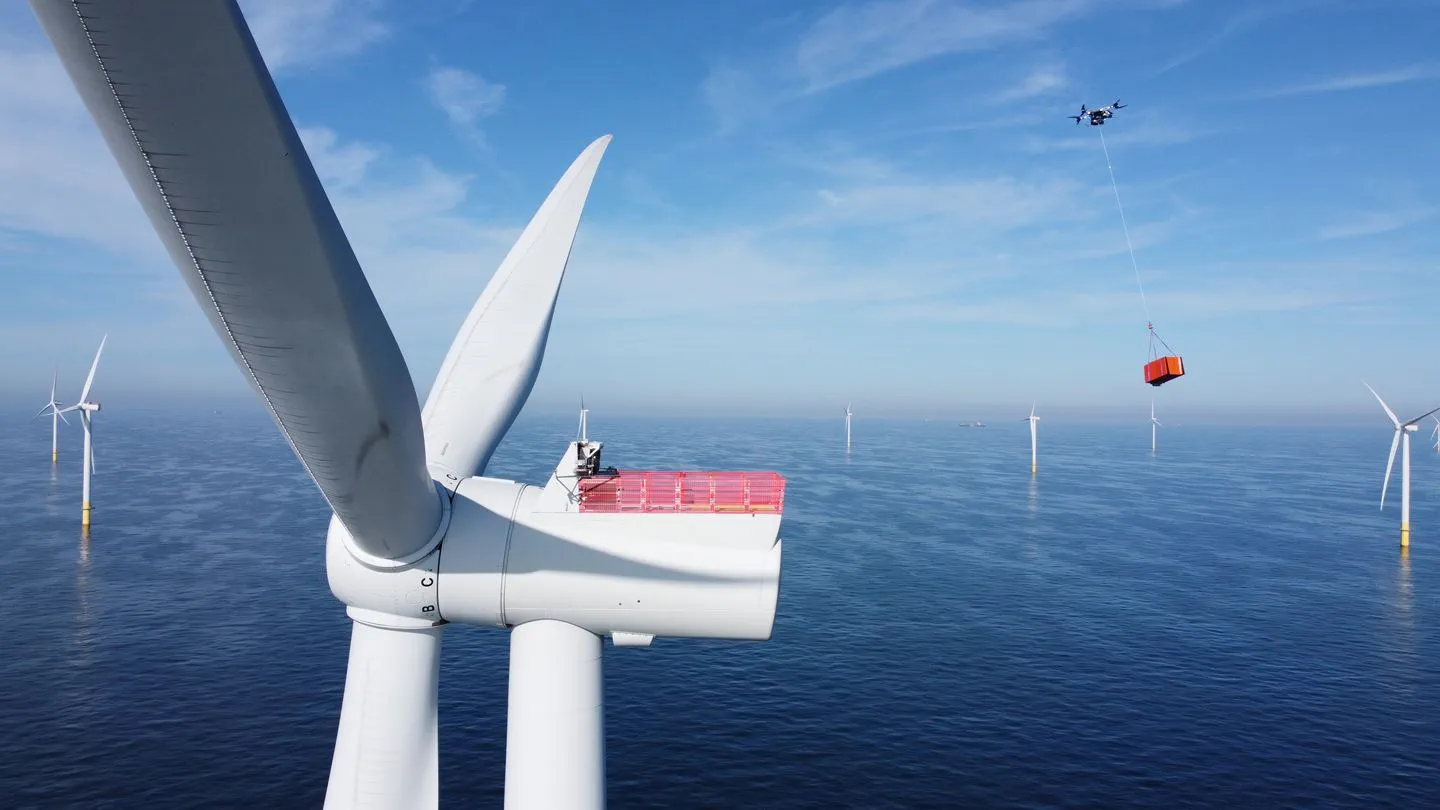
Heavy-lift drones are ideal for supplying both urban and rural areas, including remote and hard-to-reach locations. This includes delivering spare parts to offshore oil rigs, hauling equipment to construction sites on hilltops, or resupplying mountain camps.
On-Site Industrial Uses
On large industrial sites, such as mines or factories, heavy-lift drones are used to airlift tools, construction materials, and other supplies to specific locations, avoiding the need for expensive cranes or manual transport. This improves both worker safety and operational efficiency by streamlining workflows on complex sites. In agriculture, heavy lift drones are also employed for tasks like precision spraying and crop health monitoring, further demonstrating their versatility across industries.
Cost and Pricing of Heavy-Lift Drones
The price of a heavy lift drone can vary dramatically based on its capabilities and intended use. Entry-level heavy lift drones, suitable for lighter industrial tasks, typically start around $5,000. As payload capacity, flight time, and advanced features increase, so does the price—high-end models designed for large-scale operations or specialized missions can exceed $250,000.
Key factors influencing the cost include the drone’s maximum payload capacity, the quality and power of its motors, the sophistication of its flight control systems, and the integration of advanced safety or navigation features. Drones with longer flight times, hybrid power systems, or specialized delivery systems command higher prices due to their enhanced performance and reliability.
It’s also important to consider the ongoing operational costs associated with heavy lift drones. Maintenance, repairs, and replacement parts can add to the total cost of ownership, as can training for operators and compliance with regulatory requirements. However, for many businesses, the investment in a heavy lift drone pays off through increased efficiency, reduced labor costs, and the ability to perform tasks that would otherwise require more expensive or less flexible equipment.
Maintenance and Service Considerations
To ensure the safe and efficient operation of heavy lift drones, regular maintenance and servicing are essential. Operators should conduct routine inspections of critical components such as the airframe, motors, propellers, and advanced flight control systems. Identifying and replacing worn or damaged parts before they fail helps prevent costly downtime and extends the lifespan of the drone.
Following the manufacturer’s maintenance guidelines is crucial, as is keeping detailed records of all service activities. This not only supports safe operation but also helps manage operational costs by catching issues early and avoiding major repairs. In addition, heavy lift drones often require specialized storage and transportation solutions to protect sensitive electronics and structural components from damage.
Proper maintenance also includes software updates for flight controllers and navigation systems, ensuring that the drone benefits from the latest safety features and performance enhancements. By prioritizing regular servicing and adhering to best practices, operators can maximize the reliability and cost-effectiveness of their heavy lift drone fleet.
Heavy-Lift Drone Technology & Leading Models
Heavy-lift drones are designed with specialized technology to handle large and heavy payloads. They feature robust, lightweight frames, multiple high-torque motors, and powerful battery or hybrid-electric systems. Some leading models include:
-
DJI FlyCart 30: A new delivery drone designed for long-distance transport, with a payload capacity of 30 kg (66 lbs) and a winch system for precise drops. It features dual batteries, an integrated parachute, a dual binocular vision system, and supports dual operator mode for enhanced safety and flexibility.
-
Volocopter VoloDrone: An electric, multi-rotor cargo drone capable of lifting 200 kg (~440 lbs) for middle-mile logistics.
-
Griff Aviation 300: A specialized octocopter that can lift up to 227 kg (500 lbs) for short, heavy-duty flights.
-
Freefly Alta X: A popular hexacopter in the filmmaking industry, designed to carry heavy camera rigs up to 16 kg (35 lbs) with exceptional stability. For more options and information, explore a wide range of enterprise drones tailored to industrial and commercial applications.
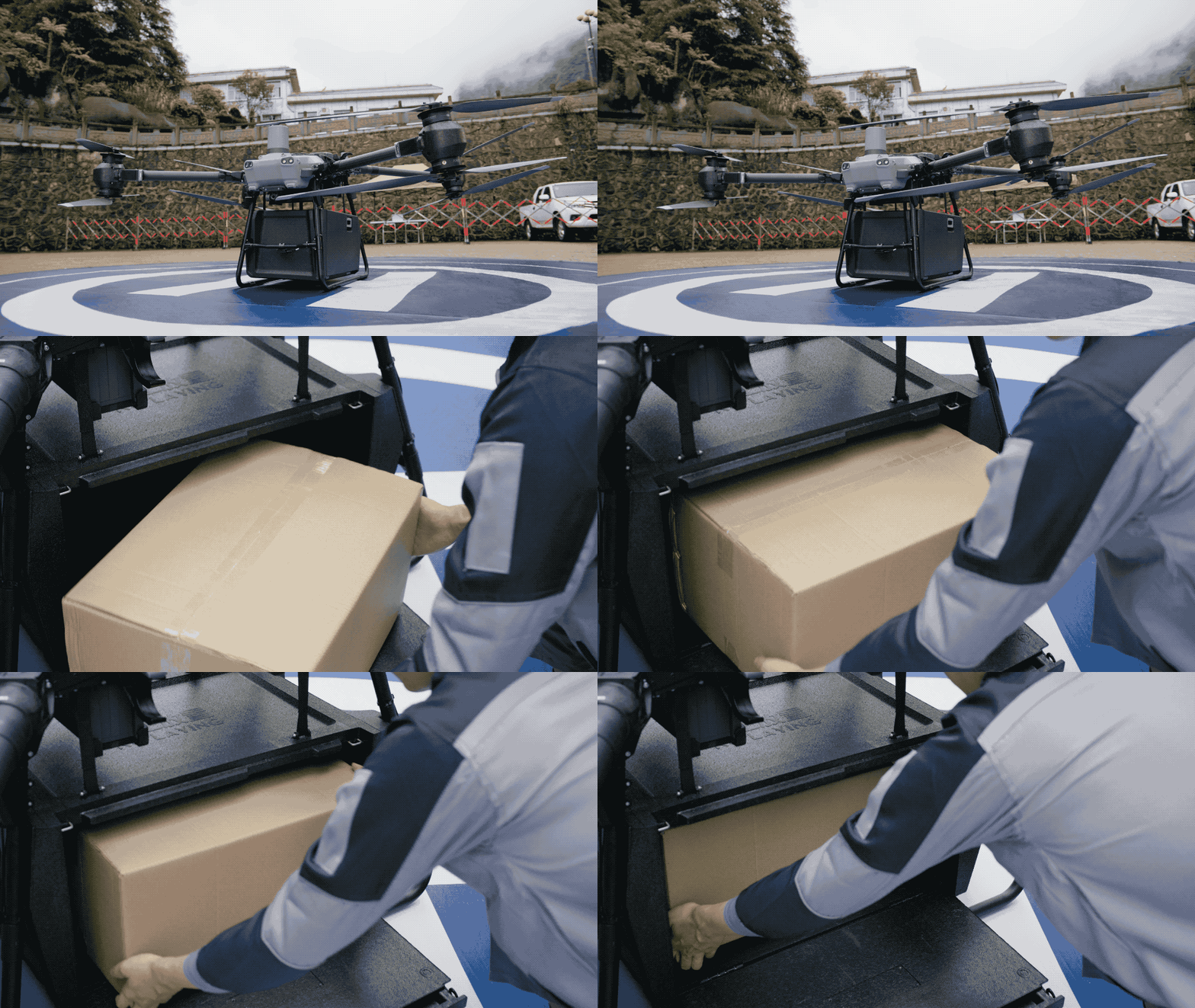
Many of these drones utilize vertical takeoff technology, making them suitable for deployment in confined spaces and urban air mobility applications, including air taxi services. Large drones, including the largest drone models, are designed by drone manufacturers specializing in heavy-lift and cargo drones, and are capable of heavy equipment transport and disaster relief operations. Cargo drones and heavy payload drones are increasingly used for delivery heavy lift drones applications, such as medical supply delivery and emergency services, especially in disaster relief scenarios. Drones equipped with lidar sensors and carrying advanced sensors are used for data collection, mapping, and environmental monitoring. Heavy lift drone carry capabilities allow these drones to carry substantial weights, and drone carry limits are determined by drones weighing and regulatory requirements set by civil aviation administration authorities. Advanced safety systems, such as parachutes and dual batteries, help these large drones remain airborne safely during complex missions.
Heavy Lift Drone Design and Components
Heavy lift drones are engineered to meet the demanding requirements of industrial operations, combining strength, stability, and advanced technology. At the heart of every heavy lift drone is a robust airframe, typically constructed from high-strength materials like carbon fiber or aluminum alloys. These materials provide the durability needed to support heavy payloads while keeping the drone’s own weight to a minimum. Additionally, they are equipped with powerful propulsion systems to ensure reliable performance under challenging conditions.
Powerful brushless DC motors are a hallmark of heavy lift drones, delivering the thrust necessary to lift and transport substantial loads. These motors are paired with large, carefully designed propellers that maximize efficiency and ensure smooth, stable flight—even when carrying heavy payloads in challenging environments.
Advanced flight control systems are another critical component. These systems use sophisticated sensors and onboard computers to manage everything from basic stabilization to fully autonomous flight. Features such as GPS navigation, obstacle avoidance, and real-time telemetry allow operators to precisely control lift drones, even in complex or hazardous settings. Many top heavy lift drones also incorporate advanced stabilization systems, ensuring that both the drone and its cargo remain steady during flight, which is especially important for sensitive or high-value heavy payloads.
With these design elements, heavy lift drones are able to perform autonomous flight missions, carry out precise deliveries, and operate reliably in rugged industrial environments—making them indispensable tools for modern supply chains.
How Much Weight Can They Lift?
Heavy lifting drones are engineered to carry substantial loads, with payload capacities ranging from around 5 kg for smaller models up to over 200 kg for specialized vehicles. The strongest heavy lifting drones today can lift nearly 500 lbs, rivaling the capacity of small helicopters.
Overcoming Challenges
While heavy-lift drones are promising, they still face challenges that are being addressed by evolving technology and regulations. Managing large-scale drone operations requires careful planning, regulatory compliance, and advanced airspace integration.
Battery Life and Range Limitations
Carrying a heavy payload is energy-intensive, which often limits how long drones can remain airborne, typically restricting flight time to 20–40 minutes and range to 15–25 km when fully loaded. The industry is working on hybrid gas-electric and hydrogen fuel cell drones to extend endurance and overcome this key limitation. However, flight durations can vary significantly depending on the drone's design and payload, with some models capable of staying airborne for up to 70 minutes under optimal conditions.
Regulations and Airspace Integration
Operating heavy lift drones, especially drones weighing over 55 lbs (25 kg), often requires special exemptions or certifications. Rules for beyond visual line-of-sight (BVLOS) flights are still being developed. The FAA is actively working on new air traffic management systems to safely integrate these larger drones into national airspace. Additionally, operators must obtain a Part 107 Remote Pilot Certificate from the FAA for commercial operations, ensuring they meet the necessary safety and regulatory standards.
The Future of Heavy-Lift Drones
The future of heavy-lift drones points toward greater autonomy and scale. We can expect to see:
-
Bigger Drones and Fleets: Drones with even larger payloads and autonomous fleets working in tandem to streamline logistics.
-
Sustainable Solutions: The use of zero-emission electric and hydrogen-powered drones will reduce the carbon footprint of supply chains.
-
New Delivery Routes: Drones will enable new, on-demand aerial corridors between facilities, bypassing road congestion and reshaping logistics networks.
Future advancements in heavy lift capabilities will enable drones to handle even larger payloads and more complex logistics tasks.
Experts predict that starting from 2025, heavy-lift drones will increasingly enter service, becoming a common sight in industrial logistics by the next decade.

Case Studies: Heavy-Lift Drones in Action
Heavy lift drones are making a tangible impact across a range of industries, demonstrating their versatility and value in real-world scenarios. For instance, the Draganfly Heavy Lift Drone has played a crucial role in search and rescue missions, delivering medical supplies and equipment to disaster zones and remote locations where traditional vehicles cannot reach. Its ability to carry substantial payloads and operate in challenging environments has proven invaluable for emergency response teams. Additionally, these drones have been used to deliver medical supplies to remote villages during emergencies, showcasing their life-saving potential.
In the film and media industry, the Freefly Alta X stands out for its ability to carry heavy camera rigs, enabling filmmakers to capture dynamic aerial shots that were previously impossible or prohibitively expensive. Its advanced stabilization systems and high payload capacity make it a favorite for both creative and industrial applications.
The DJI FlyCart 30 is another example, excelling in last mile delivery operations. It has been used to transport packages and essential goods to isolated communities, reducing delivery times and overcoming logistical barriers posed by difficult terrain.
These case studies highlight how heavy lift drones are not only enhancing efficiency and safety but also opening up new possibilities in fields like environmental monitoring, construction, and humanitarian aid. As technology continues to advance, the range of applications for heavy lift drones will only expand, offering innovative solutions to some of the world’s most pressing logistical challenges.
Frequently Asked Questions
What are heavy-lift drones and how do they differ from regular drones?
Heavy-lift drones are unmanned aerial vehicles (UAVs) built to carry payloads of 5 kg or more, far surpassing the capacity of standard drones. They are engineered with powerful motors, reinforced frames, and advanced controls to perform tasks that were traditionally done by helicopters or trucks.
How are heavy-lift drones being used in industrial logistics today?
They are used for “middle-mile” logistics, moving goods between warehouses, as well as for transporting materials to remote sites, resupplying offshore platforms, and airlifting materials on construction sites.
Can heavy-lift drones replace trucks or helicopters for cargo transport?
Not entirely, but in specific niches, they already do. Drones are ideal for short-range, urgent, or hazardous deliveries where traditional transport is inefficient or risky. They are emerging as a complementary tool that handles the “airlift” jobs, while trucks and helicopters continue to handle bulk, long-distance freight.
While standard drones are often used for recreational flying, heavy-lift drones are specifically designed for demanding industrial applications.
How do heavy-lift drones improve efficiency and safety in supply chains?
Drones improve efficiency by flying direct routes, bypassing traffic, and reducing delivery times. They enhance safety by removing humans from hazardous transport scenarios, such as delivering to remote, difficult-to-access locations or in disaster zones.
What are some leading heavy-lift drone models?
Some of the top models include the DJI FlyCart 30 for logistics, the Freefly Alta X for cinema and industrial applications, the Griff Aviation 300 for extreme lifting, and the Volocopter VoloDrone for heavy cargo transport.
What are the current limitations and challenges of heavy-lift drones?
Heavy-lift drones are limited by flight time and range due to battery technology, and they face complex regulatory hurdles for special certifications and BVLOS flights. Cost and public acceptance are also ongoing challenges for widespread adoption.
How are heavy-lift drones reshaping “middle-mile” logistics?
By offering a direct aerial route, heavy-lift drones can relieve bottlenecks between warehouses and distribution centers, reducing reliance on congested roads. This allows for more agile, on-demand logistics and enables a more decentralized supply chain network.
What is the environmental impact of using heavy-lift drones in logistics?
Most heavy-lift drones are electric, producing zero tailpipe emissions. By replacing traditional transport like trucks or boats, they can significantly reduce the carbon footprint of supply chains, particularly for short-haul or remote deliveries where conventional vehicles are highly inefficient.
How is the heavy-lift drone market growing, and what does the future hold?
The heavy-lift drone market is projected to grow significantly, driven by demand for automation and technological advancements. The future will bring regulatory breakthroughs for heavy-lift operations, longer flight times via hybrid power, and the integration of autonomous fleets into mainstream logistics by 2030.
The team at Global Drone HQ is here to answer any questions you may have about your drone setup. We can help guide your business or agency through the process of selecting the right heavy-lift drone and a robust, secure solution that meets your specific mission requirements.
Share:
Best Heavy Lift Drones in 2026: Top Enterprise Platforms Compared
Top Use Cases for Heavy Payload Drones in Construction & Film